
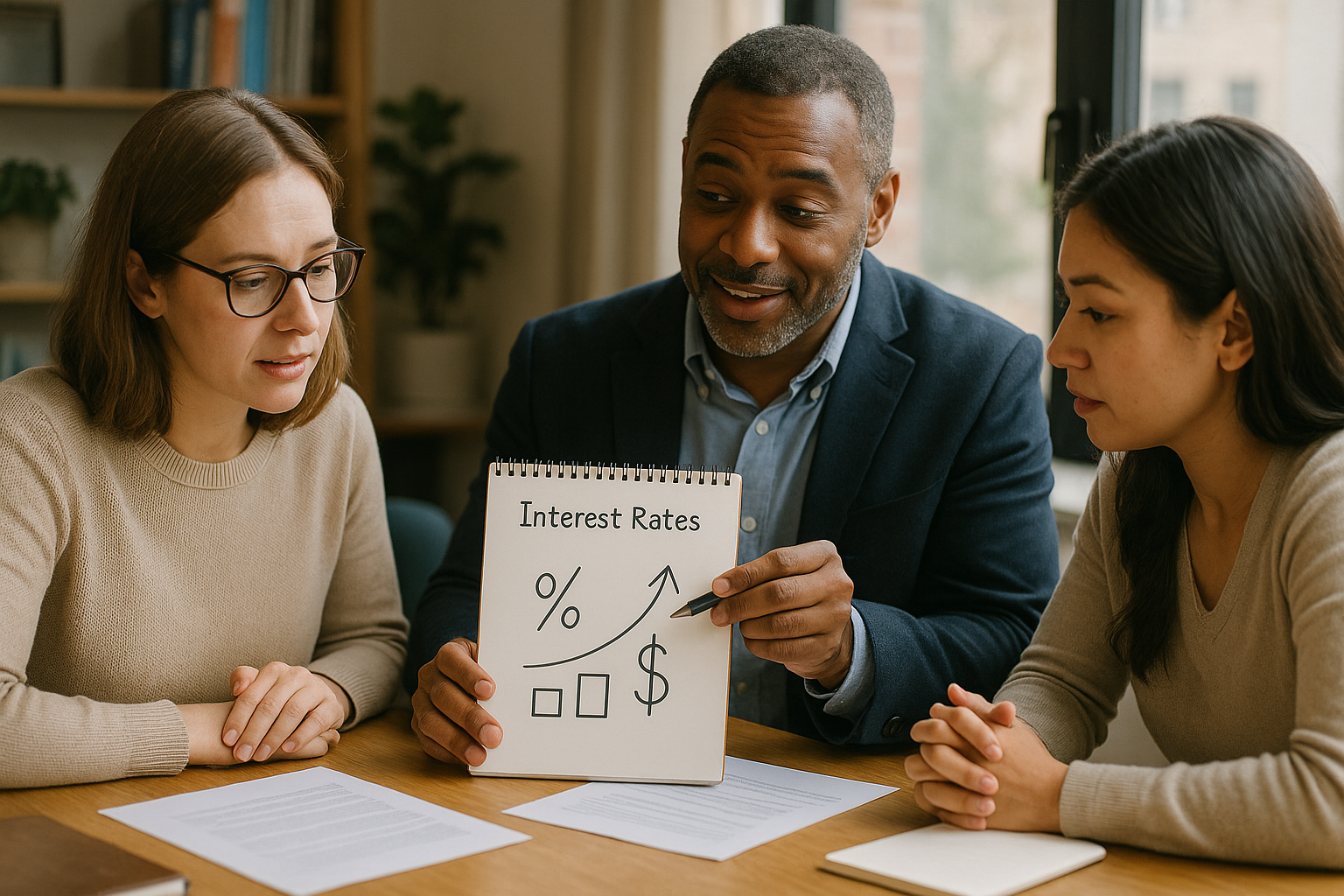
Interest Rates Explained: How They Shape Your Financial Decisions
Interest rates are one of the most powerful forces in finance, yet many people don't fully understand how they work or why they matter. Whether you're saving money, taking out a loan, or investing for the future, interest rates directly impact your financial outcomes. Let's break down this essential concept in simple terms.
What Are Interest Rates?
An interest rate is the cost of borrowing money, expressed as a percentage. When you borrow money, you pay interest to the lender. When you save or invest money, you earn interest from the institution holding your funds.
Think of interest as "rent" for money. Just as you pay rent to use someone's apartment, you pay interest to use someone's money. The interest rate determines how much that rent costs.
Example: If you borrow $1,000 at a 5% annual interest rate, you'll pay $50 in interest over one year, returning $1,050 total to the lender.
Types of Interest Rates
Simple vs. Compound Interest
Simple interest is calculated only on the original amount (principal). Compound interest is calculated on the principal plus any previously earned interest.
Simple interest example: $1,000 at 5% simple interest earns $50 each year.
Compound interest example: $1,000 at 5% compound interest earns $50 in year one, then $52.50 in year two (5% of $1,050), and so on.
Fixed vs. Variable Rates
Fixed rates stay the same throughout the loan or investment term. Variable rates can change based on market conditions.
Fixed rates provide predictability, while variable rates can offer savings when rates fall but pose risks when they rise.
What Drives Interest Rates?
Several factors influence interest rates:
Central Bank Policy
The Federal Reserve (Fed) sets the federal funds rate, which influences all other interest rates in the economy. When the Fed raises rates to combat inflation, borrowing becomes more expensive. When they lower rates to stimulate economic growth, borrowing becomes cheaper.
Economic Conditions
- Inflation: Higher inflation typically leads to higher interest rates
- Economic growth: Strong economies often see rising rates
- Unemployment: High unemployment may prompt lower rates to encourage spending
Supply and Demand
When many people want to borrow money, rates tend to rise. When few people want loans, rates often fall. Similarly, high demand for safe investments like government bonds can push rates down.
Risk Assessment
Riskier borrowers pay higher rates. Your credit score, income stability, and the type of loan all affect the rate you'll receive.
How Interest Rates Affect Your Money
Savings Accounts
Higher interest rates mean better returns on savings accounts, CDs, and money market accounts. When rates are low, these "safe" investments earn very little.
Loans and Credit Cards
Higher rates make borrowing more expensive. This affects:
- Mortgage payments
- Car loan costs
- Credit card interest charges
- Student loan rates
Investments
Rising rates can negatively impact bond prices and may make stocks less attractive compared to safer, interest-bearing investments.
Practical Strategies for Different Rate Environments
When Rates Are Rising
- Lock in fixed rates on loans if you need to borrow
- Consider shorter-term savings products to benefit from increasing rates
- Pay down variable-rate debt before rates climb higher
When Rates Are Falling
- Refinance existing loans to capture lower rates
- Consider longer-term fixed investments to lock in current rates
- Be cautious with cash investments as returns may decrease
Universal Strategies
- Improve your credit score to qualify for better rates
- Shop around as rates vary between institutions
- Understand the terms of any rate you accept
Key Takeaways
Interest rates are neither good nor bad—they're simply a tool that affects different financial decisions differently. The key is understanding how they work and adapting your strategy accordingly.
Remember that rates are cyclical. What goes up typically comes down, and vice versa. Focus on building a solid financial foundation that can weather various rate environments rather than trying to time the market perfectly.
By understanding these fundamentals, you'll make more informed decisions about borrowing, saving, and investing throughout different economic cycles.