
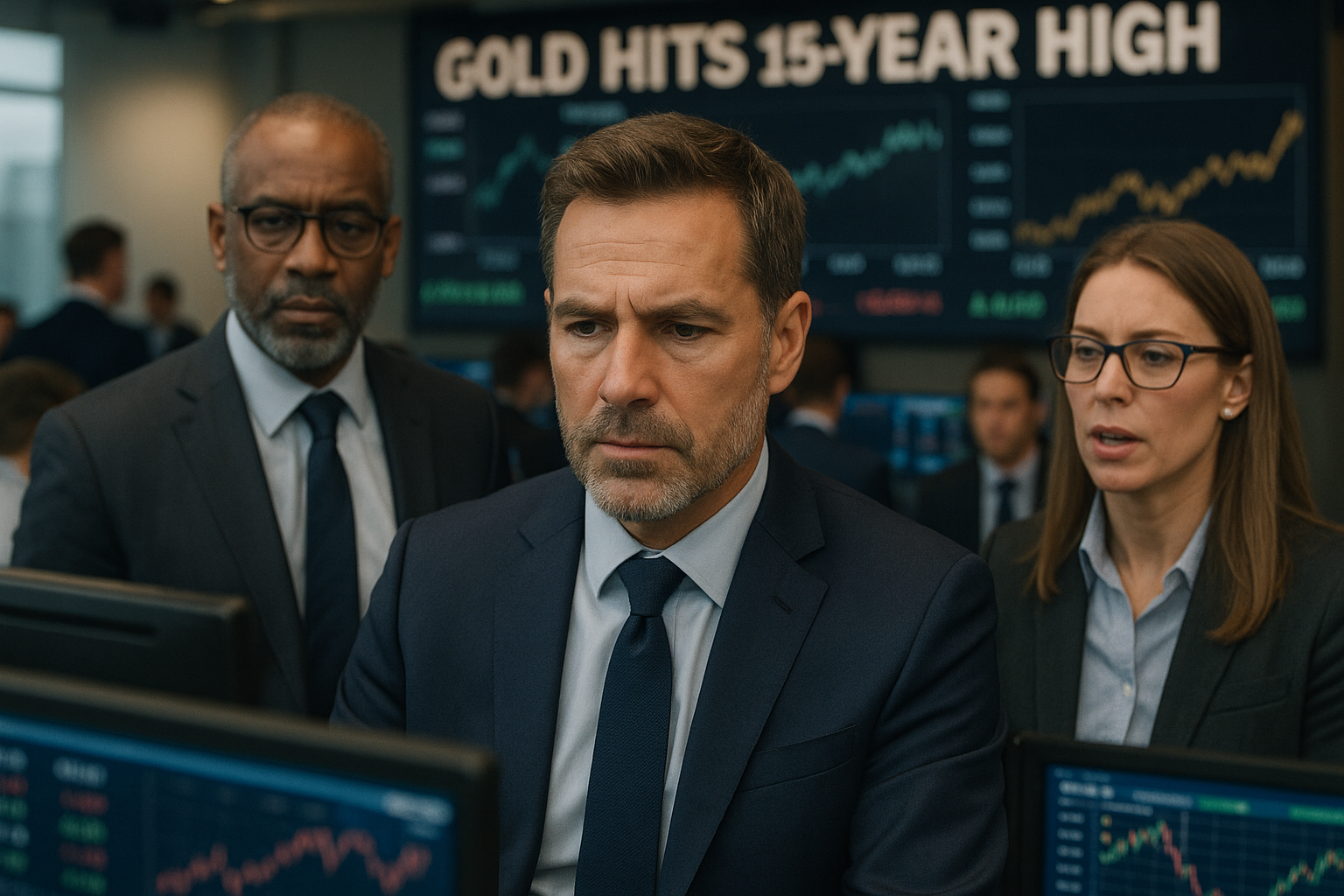
The World Gold Council reported that total gold demand reached 1,234 tonnes in Q1 2026 — the strongest first quarter since 2011. For retirement-focused investors watching gold trade above $4,800 an ounce, the question isn't whether the rally is real. It's whether the forces driving it are durable enough to justify a strategic allocation inside an IRA.
What the Q1 Numbers Actually Show
Three data points from the Q1 2026 release stand out:
- Central banks bought 244 tonnes, exceeding both the previous quarter and the trailing five-year average. J.P. Morgan's commodities desk models roughly 800 tonnes of central bank buying for the full year.
- China added more than 350 tonnes to its reserves over the reporting period, the largest single-country increase. Poland added more than 300 tonnes as part of a multi-year reserve-diversification program.
- Forward demand is expected to average 585 tonnes per quarter through the rest of 2026, according to the World Gold Council's outlook.
That demand has translated into price. Gold rose roughly 65% in 2025 — its strongest calendar year since 1979 — and is up more than 50% year over year as of April 2026. J.P. Morgan and Wells Fargo Investment Institute have both raised their year-end 2026 targets to the $6,100–$6,300 per ounce range.
Why It Matters for Retirement Accounts
Retirement investors aren't trying to trade gold's next move — they're trying to decide how much of a multi-decade portfolio belongs in an asset that doesn't pay a dividend. Three takeaways from the current data help that decision:
1. Central bank buying is a structural bid, not a trade. When the People's Bank of China or the National Bank of Poland adds reserves, they aren't selling on the next 10% pullback. That persistent, price-insensitive demand changes the floor under gold in a way that retail-driven rallies historically have not.
2. Inflation is back inside the conversation. U.S. CPI ran at 3.2% in February 2026, above the Fed's 2% target. Gold has historically performed well when real yields are pressured by sticky inflation, and central bank reserve managers cite inflation hedging as a primary motive in World Gold Council surveys.
3. Higher prices change the allocation math. A 5% gold sleeve in 2024 is mechanically a larger weight today after a 50%+ rally. Investors who set an allocation target two years ago may now be overweight without having added a single ounce.
How Much Is Reasonable?
There's no single right answer, but the published guidance clusters tightly:
- U.S. News and most mainstream advisors: 2% to 5% of total portfolio.
- Common rule of thumb cited by retirement planners: 5% to 10%.
- Sprott Asset Management argues for a permanent strategic 10% position in physical gold for diversified portfolios.
- Almost no mainstream advisor recommends more than 15% in non-income-producing assets for retirees who need portfolio income.
For investors in or near retirement, the upper end of these ranges deserves scrutiny. Gold produces no dividend or interest — every dollar allocated is a dollar not generating cash flow. That tradeoff matters more once paychecks stop.
Practical Takeaways
- Rebalance before you add. If gold's rally has pushed your allocation past your target, trim back to band before deciding whether to buy more.
- Use the IRA wrapper for physical metals. A self-directed precious metals IRA allows IRS-approved coins and bars (American Gold Buffalo, Canadian Maple Leaf, and similar) to be held tax-deferred. The 2026 IRA contribution limit is $7,500 ($8,600 for those 50+).
- Separate the inflation hedge from the speculation. A strategic 5–10% allocation behaves differently from a tactical bet on $6,300 gold. Be honest about which one you're making.
- Watch the dollar and real yields. Both moved in gold's favor through 2025. If either reverses meaningfully, the price thesis weakens.
Q1 2026 doesn't prove gold belongs in every retirement portfolio. It does suggest the buyers most willing to look past short-term price swings — sovereign reserve managers — are voting with their balance sheets.
Sources: World Gold Council Gold Demand Trends Q1 2026; J.P. Morgan Global Research; Wells Fargo Investment Institute; U.S. News & World Report; Sprott Asset Management.