
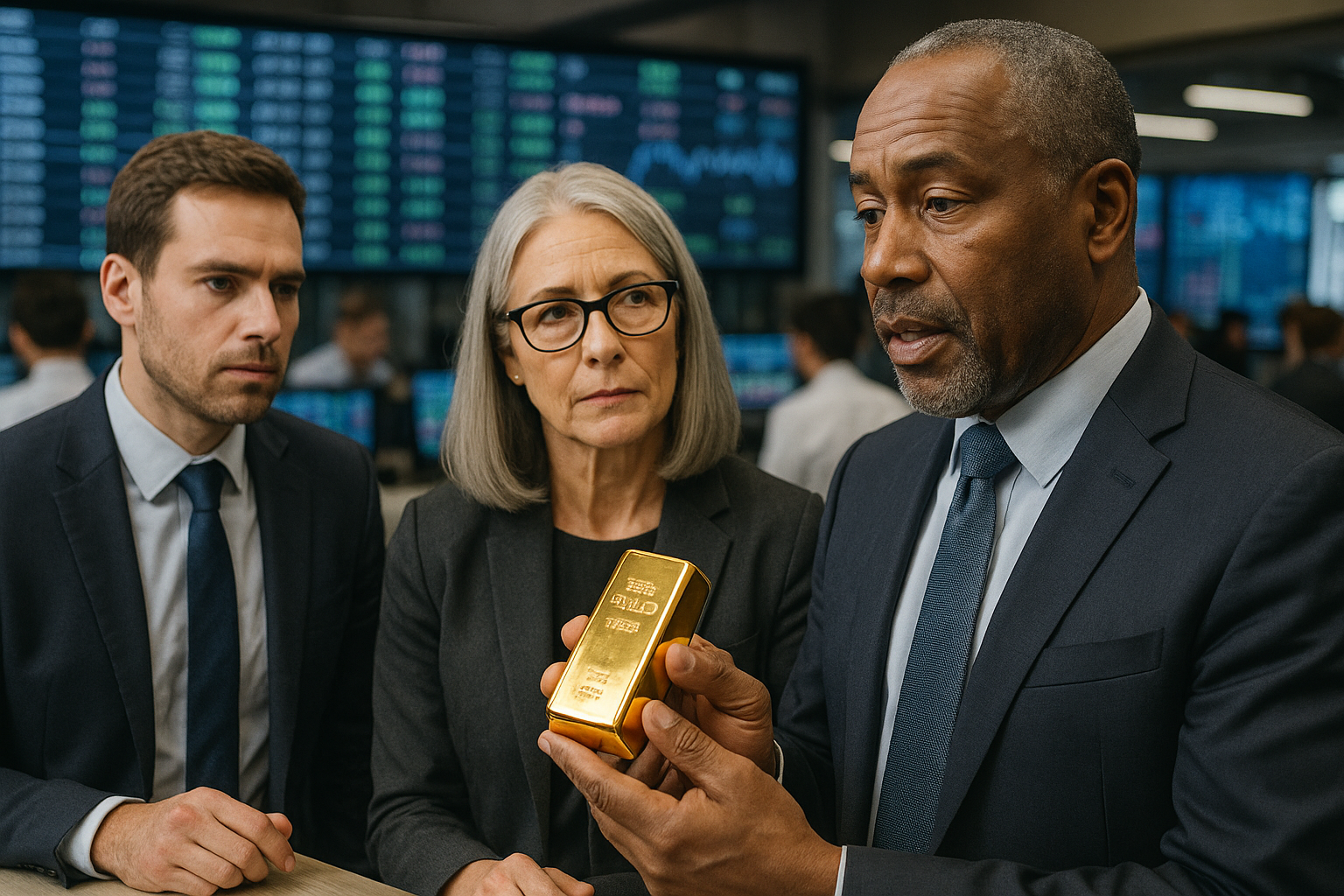
Gold has done something unusual in 2026: it kept climbing after everyone assumed the rally was overextended. Prices touched an all-time high of $5,602.22 per troy ounce on January 28, 2026, and central banks kept buying anyway. For retirement savers weighing whether to add or trim a precious metals allocation, the buyer behind the recent surge matters as much as the price itself.
The Official-Sector Buying That Won't Quit
Central banks purchased a net 244 metric tons of gold in the first quarter of 2026 — the fastest quarterly pace in more than a year — despite spot prices already sitting at a record $5,405 per ounce at the time. That followed 863 tonnes of net buying in 2025, itself a near-record year. Official-sector demand is now running at roughly double the average of the 2010s decade.
The buying is broad-based rather than concentrated. Emerging market central banks are the largest drivers, but a growing list of developed-market institutions have added to reserves as well. The motivation, consistently cited in World Gold Council survey work, is diversification away from dollar-denominated reserves and a hedge against sanctions and reserve-freeze risk that became more visible after 2022.
Why Wall Street's Forecasts Keep Getting Revised Up
The scale of official demand has forced sell-side analysts to raise their price targets several times in six months. J.P. Morgan Global Research now projects gold to reach $6,300 per ounce by year-end 2026. Wells Fargo Investment Institute lifted its year-end 2026 target range to $6,100–$6,300, up from a prior $4,500–$4,700. Both firms cite persistent central bank accumulation, sticky inflation, and elevated geopolitical risk as the drivers.
Forecasts are not guarantees, and gold has produced multi-year drawdowns before — the metal fell nearly 45% between 2011 and 2015. What the recent revisions do signal is that the professional community increasingly views the current level as supported by structural demand, not a speculative blow-off.
What This Means Inside a Retirement Account
For retirement savers, the practical question is not whether to trade gold but whether the allocation policy still fits. A few points worth thinking through:
- The diversification case has strengthened, not weakened. Gold's correlation with U.S. equities has stayed near zero over the past decade, and the metal has moved higher during recent periods of both dollar weakness and inflation surprise. That is the classic reason retirement portfolios hold it.
- Concentration risk cuts both ways. A single-digit allocation — most institutional models use 5% to 10% — captures most of the diversification benefit without overexposing a portfolio to a commodity that can move 30% in either direction in a given year.
- Physical ownership inside an IRA is a specific tax structure, not a substitute for cash reserves. The IRS allows gold, silver, platinum, and palladium inside a self-directed IRA when the products meet purity requirements (0.995 for gold, 0.999 for silver). Metals must be held by an approved depository — home storage of IRA metals continues to draw IRS scrutiny.
- Cost drag is real. A gold IRA typically carries setup fees, annual custodian fees, and storage fees that can total $200–$300 per year on top of any dealer premiums. On a small allocation, those fixed costs eat into returns.
A Practical Framework Before Adjusting an Allocation
Rather than react to the headline price, a checklist approach helps keep the decision anchored to the retirement plan:
- Restate the target allocation. Decide the policy weight (for example, 7%) before looking at current prices, then rebalance to it rather than chasing.
- Separate the vehicles. Bullion inside an IRA, gold ETFs inside a taxable account, and mining equities each have different tax and liquidity profiles. Match the vehicle to the account type.
- Stress-test the drawdown. Model a 30% decline in the metal and confirm the overall retirement plan still funds required distributions. If it does not, the allocation is too large.
- Verify the custodian and depository. For a gold IRA, use an IRS-approved custodian and a segregated or allocated storage arrangement at a recognized depository.
Gold's 2026 rally has been driven by buyers whose motivations — reserve diversification, sanctions risk, inflation hedging — are largely independent of the retail investor cycle. That is a meaningful shift from the retail-driven runs of 2011 and 2020, and it is why the price has held up under conditions that historically would have triggered profit-taking. It is also not a reason to abandon disciplined allocation policy. The right question for a retirement saver is not "should I buy gold at $5,400" but "does my current allocation still match the plan I wrote when I was not watching a record high."
Sources: J.P. Morgan Global Research, Wells Fargo Investment Institute, World Gold Council, CNBC Select, Money.com