
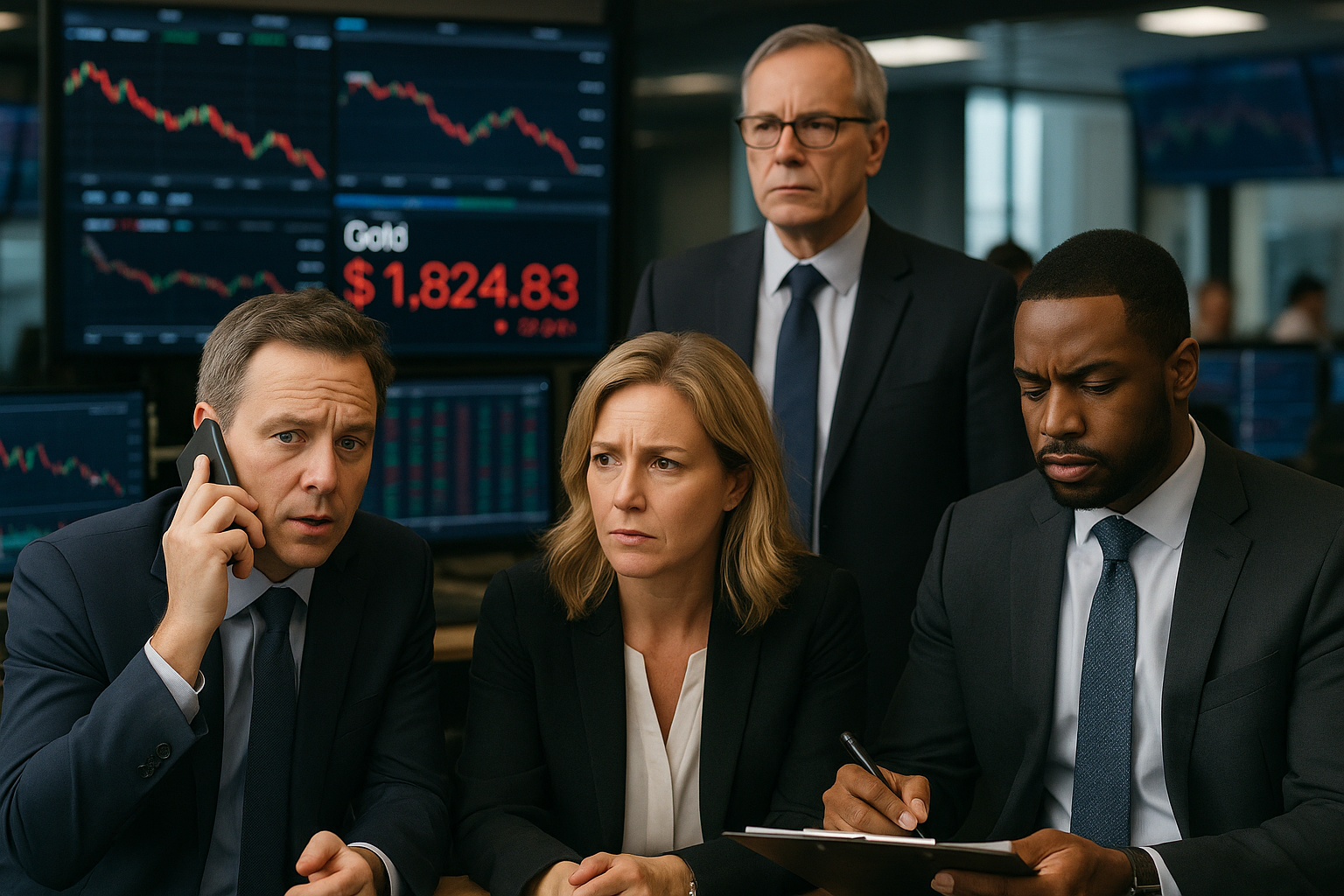
Gold set its record at $5,589.38 an ounce on January 28, 2026. On October 5, 2026, it traded around $4,153 — roughly 26% below that high, with the dollar at a year-to-date peak holding the metal under $4,200.
"Buy the dip" coverage frames this as one number to recover. For someone funding a gold IRA, it is two.
Hole One: The Drawdown Arithmetic
A 26% decline does not need a 26% gain to undo. It needs about 35%.
The math is asymmetric because the percentage is measured against a smaller base after the fall. At $4,153, gold has to add about $1,436 to retake $5,589 — and $1,436 against $4,153 is 34.6%, not 26%.
That asymmetry works in a buyer's favor on the way in. Entering near a low means the recovery gain accrues to you. The point is simply that the headline decline and the required gain are different numbers, and the larger one is the one that matters.
Hole Two: The Spread
This is the hole that is specific to physical metal, and the CFTC puts it at question six of ten in its buyer advisory.
A dealer "will always sell metal above the spot price and buy it back below the spot price," the agency writes. "The difference between the dealer's buy and sell price is known as the dealer's spread. Each dealer sets its own spread, so it pays to shop around. Some fraudulent dealers have charged spreads of more than 300 percent while other dealers may charge less than 20 percent."
That spread is a round-trip cost paid on day one and recovered only if the metal rises. Run the same asymmetric math:
| Dealer spread | Gold must rise to break even |
|---|---|
| 5% | about 5.3% |
| 10% | about 11.1% |
| 15% | about 17.6% |
| 20% | 25% |
A 20% spread — the top of what the CFTC describes as the non-fraudulent range — requires a 25% gain before the position is worth what was paid for it. That is nearly the entire drawdown, consumed by transaction costs rather than market recovery.
Why an IRA Makes This Harder to See
Once money moves from a 401(k) into a self-directed IRA, the CFTC notes, "you are on your own — you no longer have fiduciaries or advisors there to help you guard against bad investments." Dealers are commissioned salespeople, not fiduciaries.
The agency's case files show what that permits. In one matter, a dealer and custodian charged a customer nearly $150,000 in commissions and fees on a $300,000 retirement rollover. CFTC materials cite cases in which markups, fees, and commissions drained 33% to 50% of a saver's balance, and the agency has charged more than $500 million in alleged fraudulent precious-metals sales over the past decade.
Practical Takeaways
- Compute the melt value yourself. The CFTC's instruction: multiply the metal's weight by the current spot price, then compare that figure to the retail price quoted. The difference is your spread.
- Ask the buyback bid before you buy. Specifically: "What would I receive if I sold this back tomorrow?" One question converts a one-way price into a round-trip cost.
- Get every fee in writing before signing. Fees, commissions, and the agreed retail price — in writing, before any money moves.
- Read the custodian's statement for melt value. Your IRA statement shows total bullion weight times spot price. If that figure sits far below what you funded, the gap is the spread, not the market.
- Ask how the salesperson is paid, and whether commissions are buried inside the spread.
A drawdown can be a legitimate entry point. But the price on the chart is not the price a gold IRA buyer pays, and the gap between them is set by the dealer, not the market.
Sources: CFTC – Customer Advisory: 10 Things to Ask Before Buying Physical Gold, Silver, or Other Metals; CFTC – Precious Metal Frauds; MoneyTalksNews – Gold Is Roughly 26% Below Its January Record: Do the Break-Even Math; CNBC Select – The Price of Gold Today, Oct. 5, 2026; USAGold – Daily Precious Metals Market Report, October 5, 2026