
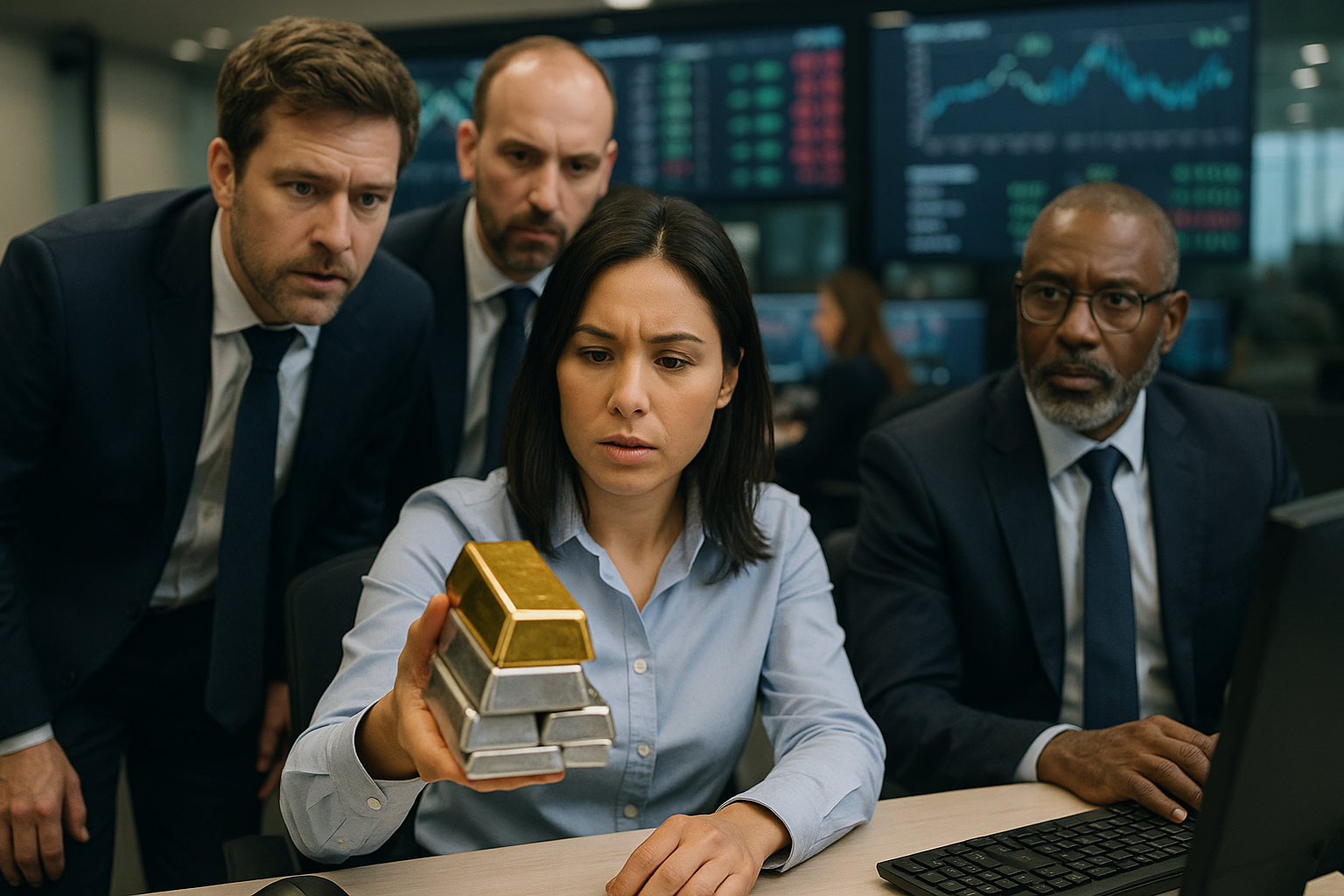
Gold and silver prices are staging a recovery this week after suffering their worst single-day declines in decades, leaving investors to wonder whether the precious metals bull run has ended or if last week's crash presents a buying opportunity.
The Historic Plunge
The precious metals market experienced extreme volatility last week when gold and silver prices collapsed from record highs. Gold peaked near $5,595 per ounce while silver reached almost $122 per ounce early Thursday before the bottom fell out.
On Friday, silver futures plummeted 28%—their worst single-day performance since March 1980. Gold dropped approximately 10% over the Friday-Monday period, erasing weeks of gains in mere hours.
Signs of Recovery
As of Tuesday, precious metals showed signs of stabilization. Silver was trading at $88.10 per ounce, up $6.43 or 7.87% from the previous day, according to Fortune. Gold climbed approximately 3.5% as bargain hunters stepped in.
Despite the pullback, the gains over the past year remain remarkable. Silver has surged 178.97% compared to one year ago when it traded at just $31.58 per ounce. Between President Trump's inauguration and the end of January, gold prices nearly doubled while silver prices rose nearly four-fold.
What Triggered the Crash?
Analysts point to several factors behind the sudden reversal. The nomination of former Fed Governor Kevin Warsh to succeed Chair Jerome Powell after his term ends in May sparked a reassessment of Federal Reserve policy expectations.
However, the more likely explanation may be simpler. "Precious metals prices collapsed simply because they had already gone parabolic," said Mark Matthews, an analyst at Bank Julius Baer. "Once profit-taking started, it just snowballed."
A stronger dollar also contributed to the selling pressure. The dollar index strengthened about 0.8% since Thursday, making greenback-priced gold less attractive for foreign buyers.
Why Metals Surged in the First Place
The rally that preceded the crash was driven by multiple factors: economic uncertainty, high inflation, rising national debts, and aggressive central bank buying. Emerging economies including China and Turkey have been accumulating gold to reduce their dependence on the U.S. dollar.
Trump administration policies—including tariffs and pressure on the Federal Reserve—had weakened the dollar and increased demand for safe-haven assets throughout 2025 and into early 2026.
What Analysts Expect Next
Despite the volatility, major investment banks remain bullish on precious metals. JP Morgan analysts predict gold could reach $6,300 per ounce by the end of 2026—a 30% gain from current levels—driven by continued dollar depreciation and central bank accumulation.
Citi has set a $150 silver target, framing the metal as a "high-beta macro barometer" where Chinese buying, structural supply deficits, and safe-haven flows justify a new $65–$70 price floor.
Many analysts believe silver's fundamentals look stronger than gold's due to rising industrial demand and tight supply after years of underinvestment in exploration and mining.
For investors considering precious metals, the recent crash serves as a reminder that even bull markets can experience violent corrections—and that timing the market carries significant risk.
Sources: Al Jazeera, Fortune, JP Morgan, Bank Julius Baer