
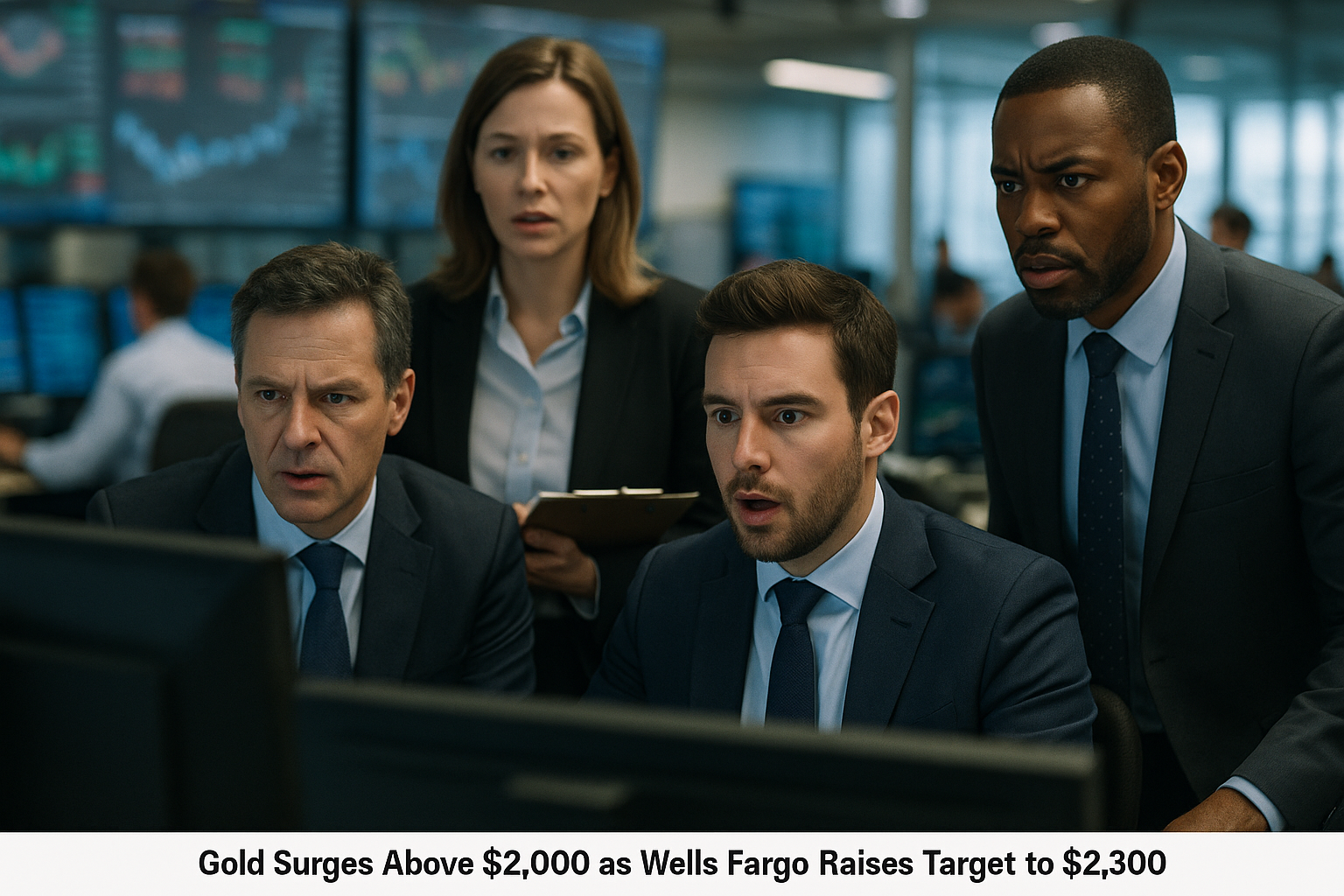
Gold Maintains Record Territory Above $5,000
Gold prices continue to hold above the critical $5,000 psychological barrier, trading at $5,066 per ounce as of February 12, 2026. The precious metal has gained an astonishing 73% over the past year, cementing its status as one of the best-performing assets amid persistent economic uncertainty.
The remarkable rally has prompted major financial institutions to dramatically revise their price forecasts, with several Wall Street banks now targeting prices above $6,000 by year-end.
Wells Fargo Dramatically Raises Gold Target
Wells Fargo Investment Institute made headlines on February 4, 2026, when it raised its year-end gold target to $6,100-$6,300—a striking 35-40% increase from its previous forecast of $4,500-$4,700.
"The prospect for lower short-term interest rates and the potential to hedge against accelerating policy surprises prompt us to raise our 2026 gold target," the bank stated, adding that current conditions should encourage further central bank purchasing.
From current levels around $5,066, the Wells Fargo target implies 21-25% additional upside potential for gold investors.
Major Banks Align on Bullish Outlook
Wells Fargo is not alone in its optimism. A consensus has emerged among major financial institutions, with most clustering their year-end targets around the $6,000-$6,300 range:
- JPMorgan: $6,300 target (approximately 25% upside)
- UBS: $6,200 target (approximately 23% upside)
- Deutsche Bank: $6,000 target (approximately 19% upside)
- Société Générale: $6,000 target (approximately 19% upside)
- Goldman Sachs: $5,400 target (approximately 7% upside)
This clustering of forecasts among influential banks represents a powerful consensus that gold's bull market has substantial room to run.
Central Bank Buying Drives Demand
One of the primary catalysts behind gold's surge is continued central bank accumulation. China's central bank has extended its gold buying spree for the 15th consecutive month, with holdings rising to 74.19 million fine troy ounces valued at $369.58 billion.
This persistent demand from official sector buyers has provided a strong foundation for prices, even as the metal trades at all-time highs.
Federal Reserve Policy Supports Higher Prices
Markets have increasingly priced in a more accommodative Federal Reserve, with expectations now pointing to three rate cuts this year—up from two just a week ago. The shift followed softer U.S. economic data, including December retail sales that fell short of forecasts.
Lower interest rates typically benefit gold, which does not pay income, by reducing the opportunity cost of holding the precious metal versus interest-bearing assets.
Silver and Other Precious Metals Rally
The broader precious metals complex has followed gold higher. Silver is trading at $83 per ounce, while platinum stands at $1,714 and palladium at $2,124 per ounce.
Investment Considerations
Financial advisors note that gold can help diversify portfolios and reduce the impact of market volatility during turbulent economic periods. According to financial advisor James Taska, investors should consider that "it is much easier to rebalance a client's allocation of gold if it is owned as an exchange-traded fund (ETF)."
With gold having gained over 25% since early 2025 and major banks projecting further gains, precious metals remain a focal point for investors seeking protection against inflation and economic uncertainty.
Sources: Fortune, Finance Magnates, Wells Fargo Investment Institute