
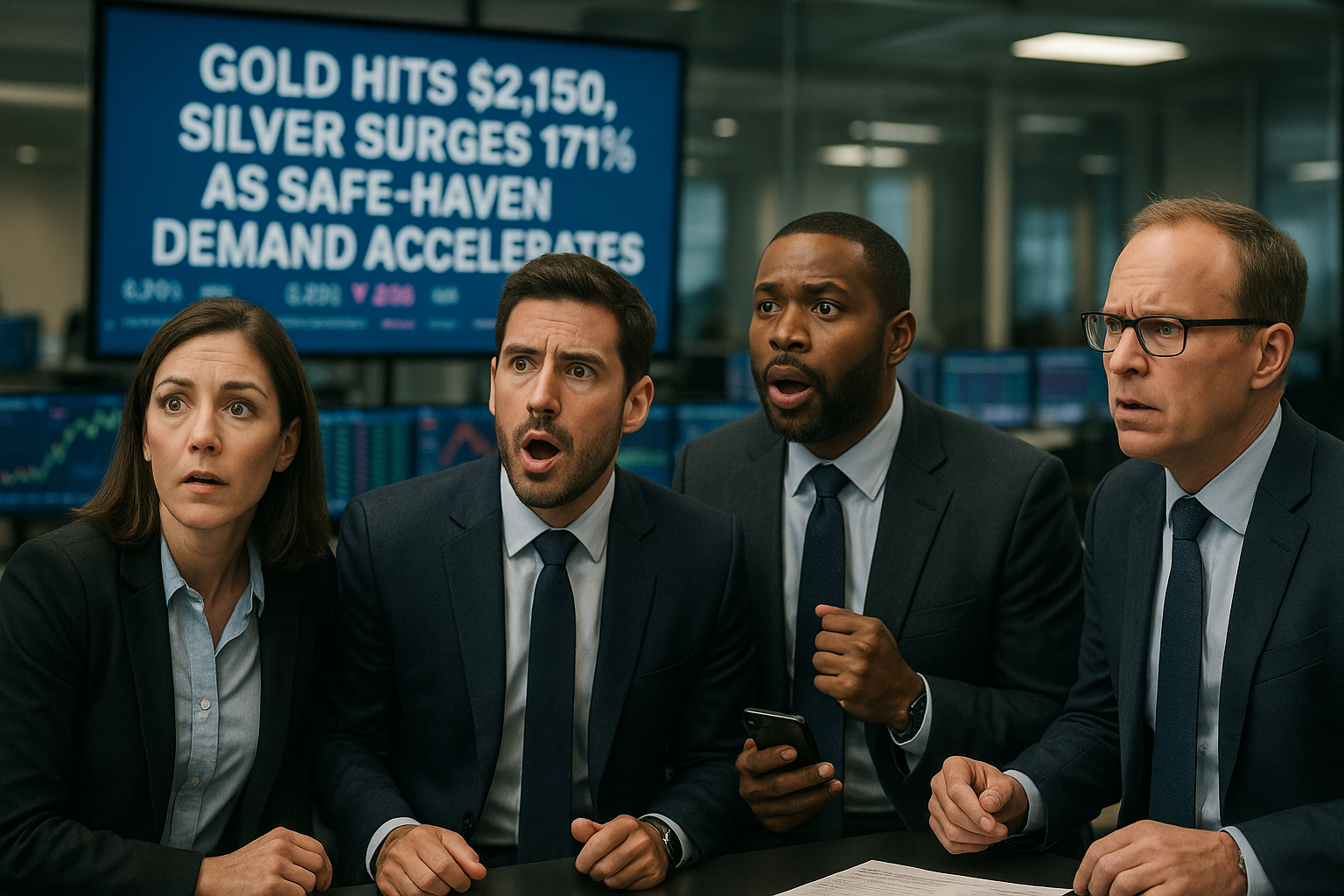
Precious metals continued their remarkable ascent this week as investors flock to safe-haven assets amid mounting economic uncertainty and a weakening U.S. dollar. Gold is trading at $5,150 per ounce while silver has posted an extraordinary 171% gain over the past year.
Silver's Historic Rally
Silver stood at $87.87 per ounce as of Tuesday morning, marking a $1.59 increase from the previous session. The white metal has climbed more than 150% over the past year, reaching levels unseen in more than a decade.
On Monday, silver dramatically outpaced gold for the second consecutive week, surging 4.81% to $86.31 per ounce. The metal's performance reflects a combination of constrained supply and rising industrial demand alongside intensified investor interest.
Market analysts point to anticipated surges in industrial demand—from renewable energy applications to electronics manufacturing—as potential fuel for further gains. The solar panel industry alone has significantly increased silver consumption as global renewable energy installations accelerate.
Gold Maintains Momentum Above $5,000
Gold traded at $5,179.80 per ounce on Monday, posting a $98.90 gain representing a 1.95% daily increase. The yellow metal has appreciated more than 74% over the past 12 months, with prices rising over 25% since the start of 2025.
The rally to all-time highs has been fueled by ongoing inflation concerns and broader economic uncertainty. Investment advisors continue recommending gold as a stabilizing force for portfolios during volatile market conditions.
Dollar Pressure and Tariff Concerns
The U.S. dollar has come under significant pressure following President Trump's executive order raising global tariffs under Section 122 of the Trade Act of 1974 to 15% from the previous 10% rate. The tariff increase came after the Supreme Court struck down the administration's global "reciprocal" tariffs.
Market participants are expressing concern that foreign investors may reduce their exposure to dollar-denominated assets, providing additional tailwinds for precious metals as alternative stores of value.
Treasury Secretary Weighs In
U.S. Treasury Secretary Scott Bessent attributed recent extreme swings in the metals market to Chinese traders, describing the rally as a "speculative blowoff." Silver remains down approximately 33% from its all-time high reached on January 29, just before a selloff that temporarily erased nearly 50% of its value.
Interest Rate Outlook
According to CME Group data, 92.1% of market participants expect the Federal Reserve to hold rates steady at 3.50-3.75% at the March meeting, with only 7.9% pricing in a rate cut to 3.25-3.50%.
Analysts expect gold to trade within a range of $4,914.81 to $5,719.00 by the end of February, with geopolitical tensions and inflation expectations providing support while dollar strength may limit gains.
For investors considering precious metals exposure, elevated prices may be justified by forward-looking factors including persistent inflation concerns and industrial demand growth, though historical data shows silver has underperformed the S&P 500 by roughly 96% since 1921.
Sources: Fortune, Trading Economics, LiteFinance, CME Group