
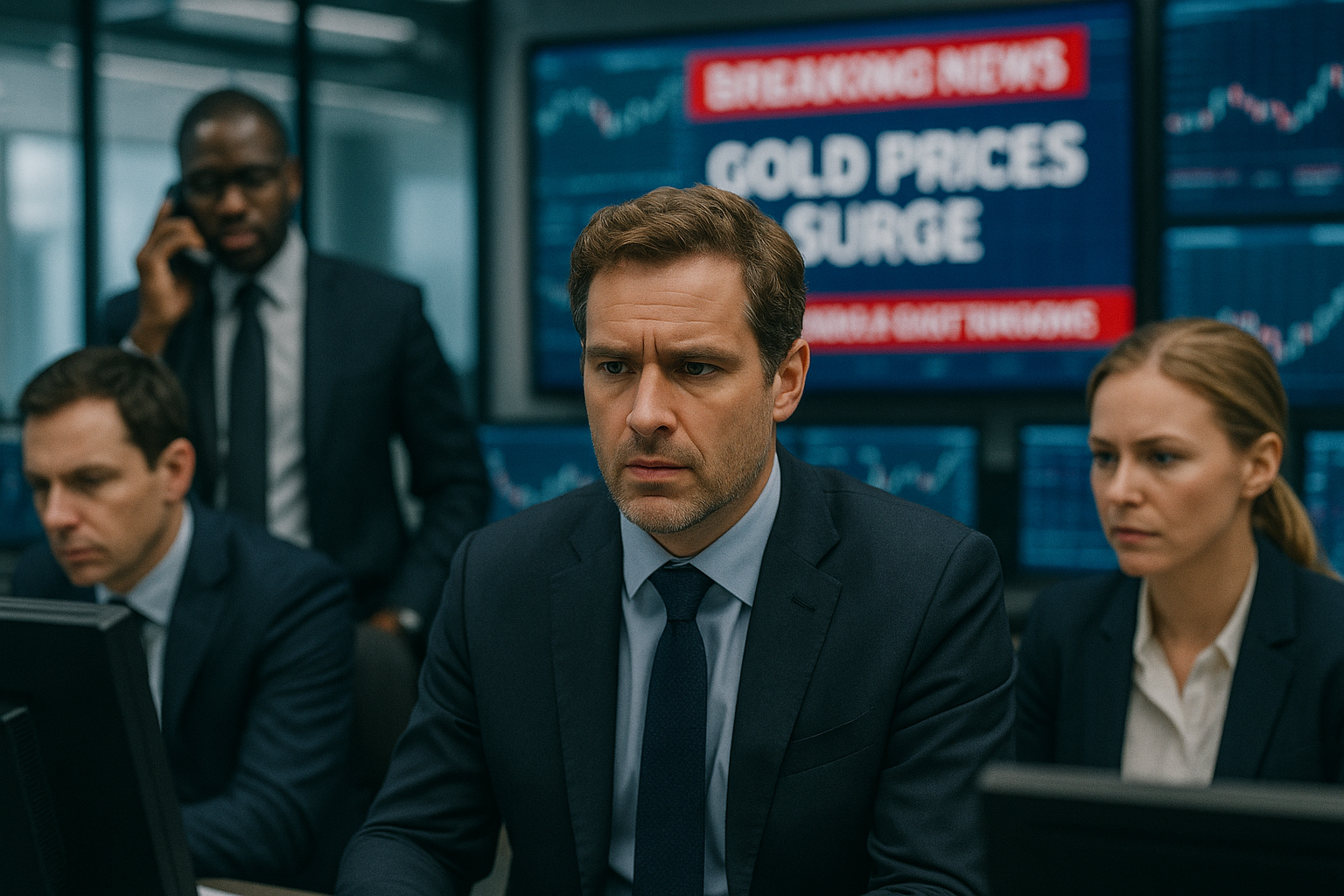
Gold Prices Stabilize After Historic Weekly Decline
Gold prices are showing signs of recovery this week after suffering their steepest weekly decline in 15 years. The precious metal is currently trading around $4,418 per ounce, rebounding from last week's dramatic selloff that saw prices plunge nearly 10%.
The yellow metal had been trading above $5,000 per ounce as recently as January, when it reached an all-time high of $5,595. However, escalating tensions in the Middle East and concerns about a potential energy shock have triggered significant volatility in precious metals markets.
What Drove Last Week's Selloff
Gold futures dropped 9.6% last week, marking the biggest weekly loss since September 2011. The selloff intensified as investors grappled with the economic implications of the ongoing U.S.-Iran conflict, which has entered its third week.
On Monday, spot gold initially plunged more than 5% to $4,262 before recovering sharply to trade near $4,431. The recovery came after President Trump announced a postponement of planned strikes on Iranian energy infrastructure, raising hopes for a potential de-escalation.
Silver has also felt the pressure, with futures tumbling to $69.66 per ounce—their lowest closing level since December. The white metal is now down more than 1% for 2026 after surging 135% last year.
Experts See Opportunity in the Pullback
Despite the recent turbulence, several market analysts remain bullish on gold's longer-term prospects.
Thomas Winmill, portfolio manager at Midas Funds, predicts gold will reach prices above $5,500 per ounce within the next month or two. "Dollar-denominated assets are seen as increasingly risky," Winmill noted, pointing to strong demand from central banks diversifying away from U.S. securities.
Hiren Chandaria of Monetary Metals expects any steep pullbacks to be "relatively short-lived," observing that dips tend to attract fresh buying when macro drivers remain powerful.
Darius Dale of 42 Macro echoed the bullish sentiment, stating that "the macro backdrop is supportive: global liquidity is trending higher, the U.S. dollar outlook is softening." His bottom-line assessment: "Expect gold to grind higher."
Silver Outlook: Higher Volatility Expected
Silver's trajectory remains closely tied to gold, though with amplified volatility due to its thinner market structure.
James Cordier of OptionSpreakers.com notes that silver, currently trading around $69 per ounce after retreating from its $120 peak, should "consolidate below $100 until new fundamentals present themselves."
Chandaria cautions that silver could experience even steeper pullbacks—or stronger appreciation—than gold as markets continue to navigate geopolitical uncertainty.
Key Factors to Watch
Investors monitoring precious metals should keep an eye on several key drivers in the weeks ahead:
- Geopolitical developments in the Middle East, particularly any escalation or de-escalation of the Iran conflict
- Central bank purchasing activity, which has been a major source of gold demand
- U.S. dollar strength and Federal Reserve monetary policy signals
- Inflation data as energy prices remain elevated
Despite the recent volatility, gold remains up 45% from a year ago, underscoring the metal's strong performance during periods of economic uncertainty.
Sources: Fortune, CBS News, CNBC