
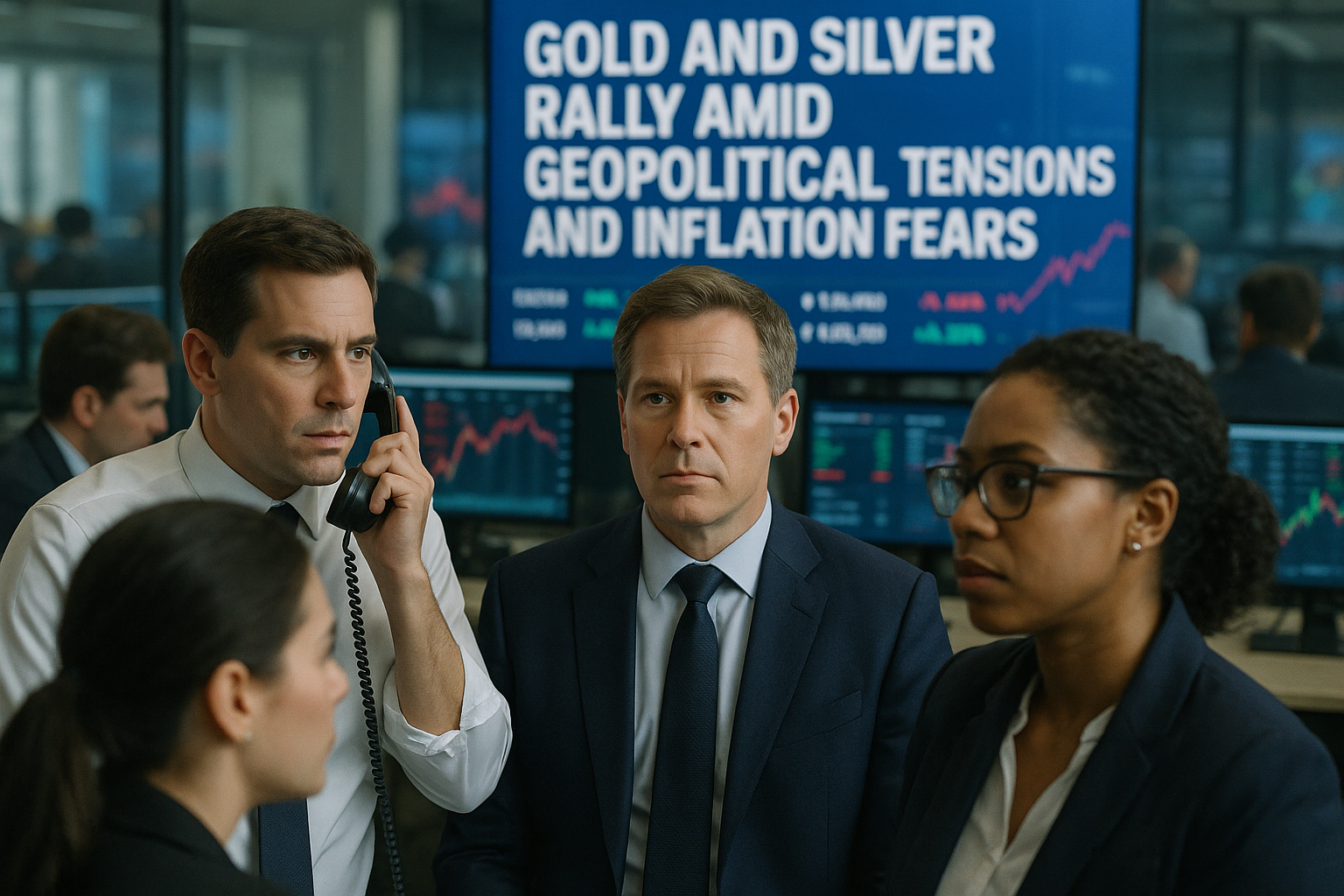
Precious Metals Show Strength Despite Volatile Trading
Gold and silver continue to demonstrate their traditional role as safe-haven assets, with both metals posting significant gains amid persistent inflation concerns and ongoing geopolitical uncertainty in the Middle East.
As of April 13, 2026, gold was trading at $4,728 per ounce, representing a remarkable 47.24% increase from one year ago, according to Fortune. While the yellow metal slipped $2 from the previous day's close, the broader trend remains decidedly bullish, with prices having surged more than 25% since the start of 2025.
Silver has followed a similar trajectory, climbing to $75.6 per ounce and heading for a third consecutive weekly gain. The white metal has gained 11% since the start of 2026, outpacing gold's performance during the most recent rally phases.
Inflation and Rate Expectations Drive Demand
The latest Consumer Price Index report revealed inflation at 3.3%, the highest reading since May 2024. The 0.9% monthly jump marked the steepest increase since mid-2022, reinforcing the investment case for precious metals as inflation hedges.
Market expectations for earlier and deeper Federal Reserve interest rate cuts have further bolstered demand for non-yielding assets like gold and silver. A weaker dollar has added additional support, making precious metals more attractive to international buyers.
Financial advisor James Taska noted to Fortune that gold serves as "a steadying force in a portfolio amid volatile markets," highlighting the metal's enduring appeal during uncertain economic conditions.
Geopolitical Factors Add Complexity
The ongoing conflict involving the United States, Israel, and Iran continues to inject volatility into commodity markets. A two-week US-Iran ceasefire announced in early April initially triggered a sharp reversal, with gold surging to $4,850 per ounce on April 8—a gain of over 3% in a single session.
Silver's response was even more dramatic, rallying nearly 7% to $77 per ounce on the same day, its highest level since March 18. However, the fragile truce faced pressure as Israeli strikes on Lebanon and disruptions in the Strait of Hormuz threatened to derail negotiations.
Supply Dynamics Favor Higher Prices
Industrial demand for silver from solar panel manufacturing and electronics sectors continues to tighten global supply. China's silver imports reached 206.76 tonnes in the first two months of 2026—the highest level in eight years—further constraining available inventory.
Analysts from MineListings noted that "ongoing supply deficits may support future investment demand," while recommending that investors monitor the gold-silver ratio as a key indicator for long-term price projections.
Price Forecasts Point Higher
Major financial institutions maintain bullish outlooks for precious metals. JPMorgan and Goldman Sachs expect gold to fluctuate within a $4,000 to $6,300 range, while Wells Fargo raised its target to $6,100-$6,300 in late March.
For silver, Bank of America analyst Michael Widmer maintains his $135-$309 target, based on expected compression in the gold-silver ratio. Such projections suggest substantial upside potential for investors who remain positioned in the precious metals complex.
Gold's historical performance supports the long-term investment thesis, having delivered an average annual return of 7.9% from 1971 to 2024. While this trails the 10.7% average for stocks, the diversification benefits and inflation protection continue to attract retirement savers and institutional investors alike.
Sources: Fortune, MineListings, Trading Economics, Finance Magnates