
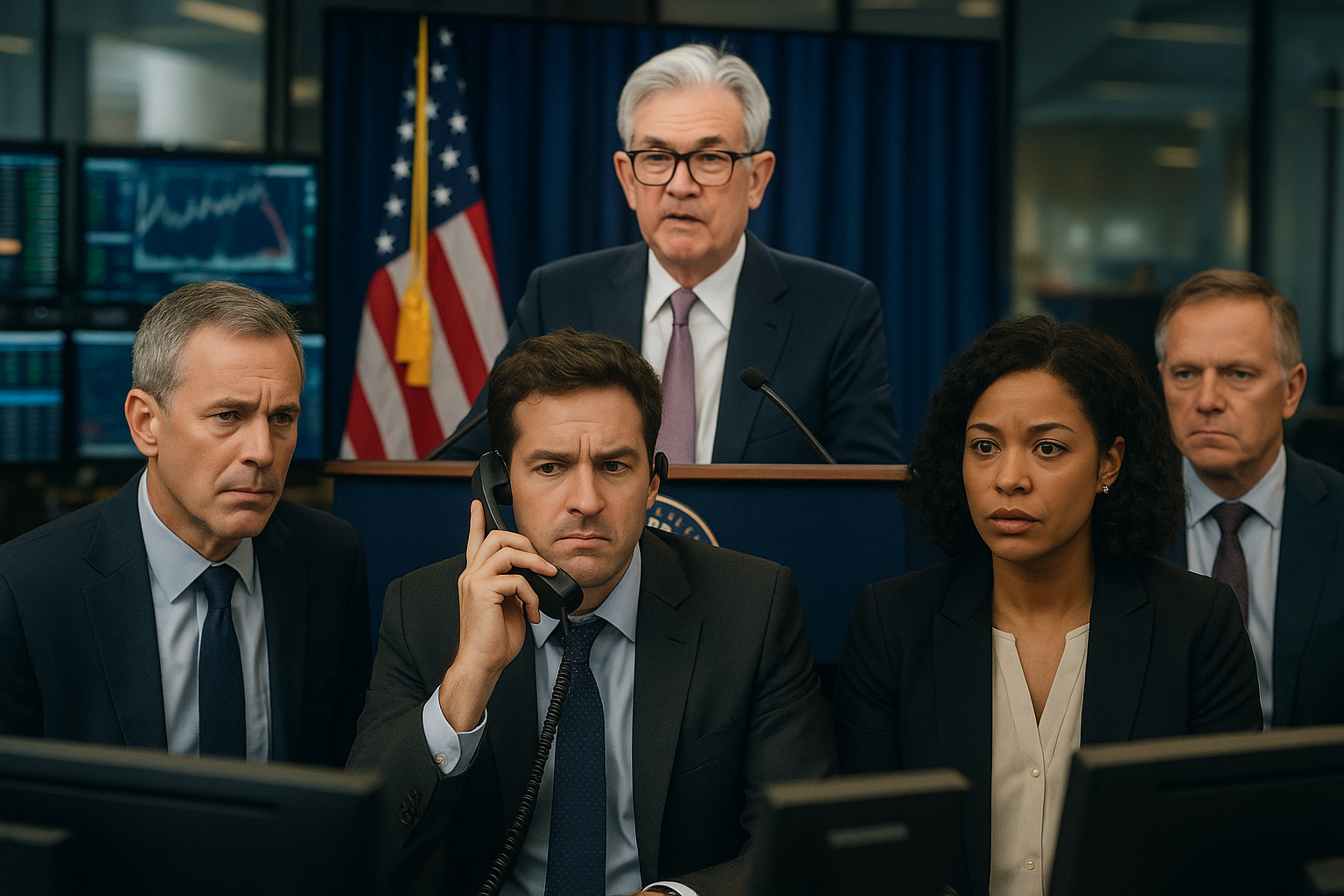
Fed Stands Pat as Committee Fractures
The Federal Open Market Committee voted Wednesday to leave its benchmark federal funds rate unchanged at a target range of 3.50% to 3.75%, an outcome markets had priced as a near-certainty. The headline was not the rate itself but the unusually splintered vote behind it: four officials dissented, the most since October 1992.
The 8-4 split underscored how sharply policymakers disagree about the path forward as inflation pressures from oil and tariffs collide with cooling labor data. Markets had assigned essentially 100% odds to no change, but the breadth of dissent caught traders off guard and sent two-year Treasury yields whipsawing around the announcement.
Three Hawks, One Dove
The dissenters split in opposite directions. Three FOMC members voted against the decision because they wanted the statement to drop language pointing to a possible future cut, signaling they believe the next move should be a hold or even a hike if oil-driven inflation proves sticky. A fourth dissenter, Governor Stephen Miran, broke the other way, calling for an immediate rate cut to get ahead of softening growth.
That kind of two-sided dissent is exceptionally rare. In practice, it tells investors the committee has lost the comfortable consensus that defined the past several meetings, and that incoming data—particularly the May CPI report and the next payrolls print—will determine which side of the split picks up momentum.
Powell's Surprise: He's Not Leaving the Board
The bigger surprise came at the post-meeting press conference. Jerome Powell, whose term as chair ends shortly, confirmed he will step aside as chair but said he plans to remain on the Board of Governors for an indefinite period. He linked the decision to ongoing scrutiny of the Fed's headquarters renovation project, saying he wants to wait until the investigation is "well and truly over with transparency and finality" before deciding his next move.
The announcement reshapes the political landscape around the central bank. Earlier Wednesday, the Senate Banking Committee advanced Kevin Warsh's nomination as the next chair on a party-line vote, setting up the Fed's first leadership transition since 2018. With Powell remaining on the seven-member Board, Warsh would chair a committee where the previous chair still holds a vote—an arrangement without recent precedent.
Market Reaction
Equities drifted lower into the close as traders digested the dissent count and Powell's plans. The dollar firmed modestly against major peers, and gold, which had been trading near $4,569 per ounce earlier in the session, slipped further on the firmer-dollar reaction. Silver, already down roughly 3% over the prior session to around $72.81 per ounce, extended its pullback as the hawkish tilt in the dissent reduced near-term cut expectations.
Fed funds futures continued to price one cut by year-end but at lower conviction than 24 hours earlier. The probability of a June cut, which had hovered near 60% before the meeting, drifted toward a coin flip.
What to Watch Next
The next data inflection points are the May employment report and the May CPI release, both of which will test whether the three hawkish dissenters or the lone dovish dissenter had the better read. Beyond data, attention turns to Warsh's confirmation timeline and how aggressively he signals a policy reset once seated. With Powell remaining on the Board, any tension between the incoming chair's rhetoric and the Board's voting bloc will be closely scrutinized.
For now, the Fed has bought itself time. Whether the committee can hold together through the summer, with oil-driven inflation pulling one way and labor softness pulling the other, is the question that will define markets for the rest of the second quarter.
Sources: CNBC, Fox Business, CNN Business, PBS NewsHour, Kiplinger