
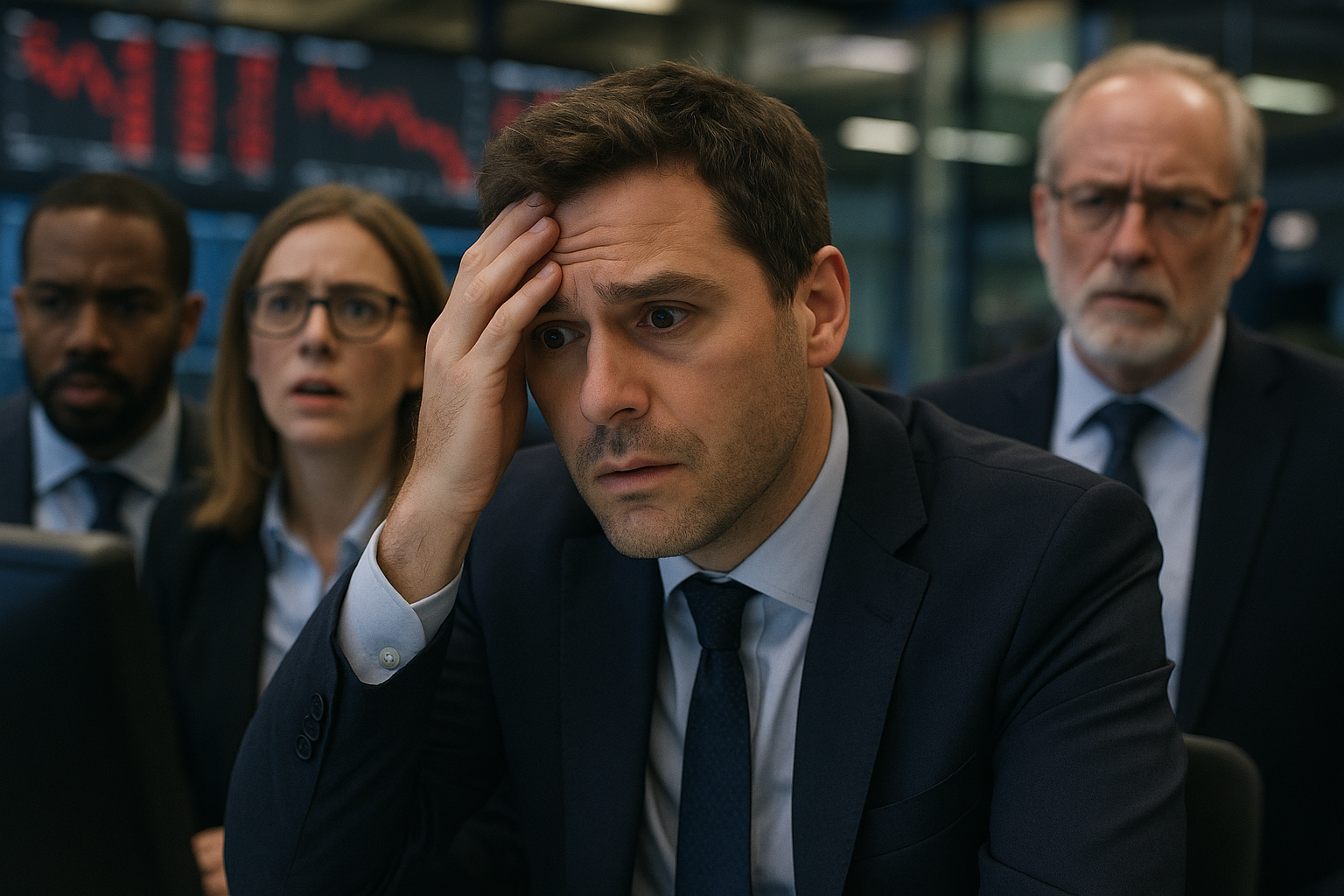
U.S. equities fell across the board Tuesday as a renewed surge in long-dated Treasury yields rattled investors and reignited fears that the Federal Reserve's next move could be a hike rather than a cut. The 30-year Treasury yield climbed to 5.198%, its highest level in nearly 19 years, weighing on rate-sensitive sectors and pulling the major averages off recent highs.
A Broad-Based Sell-Off
The S&P 500 declined 0.55%, the Dow Jones Industrial Average dropped 0.85%, and the Nasdaq Composite also slipped 0.55%. Small caps fared no better, with the Russell 2000 down 0.65%. The losses were concentrated in interest-rate-sensitive corners of the market, including technology and homebuilders, while chip stocks remained under pressure for a second straight session.
The move in yields was the day's defining force. With the 30-year benchmark pushing past 5.19%, mortgage rates and corporate borrowing costs continue to climb, threatening to throttle both consumer spending and capital expenditure plans into the back half of the year.
Inflation Data Reframes the Fed Outlook
The bond rout has gathered steam since last week's hotter-than-expected inflation prints. The April Consumer Price Index, released May 12, showed headline inflation accelerating to 3.8% year-over-year — up from 3.3% in March and the highest reading since May 2023. Core CPI rose 0.4% on the month and 2.8% annually, still well clear of the Fed's 2% target.
Energy prices were a primary culprit, jumping 3.8% in April and accounting for more than 40% of the headline gain. Gasoline prices are up 28.4% year-over-year, with food at home rising 0.7% on the month — its biggest monthly increase since August 2022. Real average hourly wages, by contrast, fell 0.5% on the month, deepening the squeeze on household budgets.
Following the data, CME Group's FedWatch tool showed traders pricing increased odds of a rate hike before year-end, with virtually no expectation of a cut at any remaining 2026 FOMC meeting. As recently as last quarter, markets had been positioned for several cuts.
A New Fed Chair Inherits a Tough Hand
The yield surge lands just as Kevin Warsh takes the helm at the Federal Reserve. Warsh was confirmed by the Senate on May 13 in a 54-45 vote — the closest Fed chair confirmation in modern history — and officially succeeded Jerome Powell on May 15. His first FOMC meeting as chair is set for June 16-17, where he will have to navigate sticky inflation, a low-hire, low-fire labor market, and geopolitical risks all at once.
Warsh is widely viewed as more hawkish than Powell, and bond markets appear to be repricing accordingly. "Markets may see increased uncertainty as Wall Street adjusts to Warsh's approach," one strategist noted, with his early communications expected to set the tone for the second half of the year.
Geopolitics and Oil in the Mix
Beyond rates, traders are also tracking the U.S.-Iran conflict. President Donald Trump's recent cancellation of planned strikes briefly eased oil prices, but crude remains elevated and continues to feed into headline inflation. Combined with chip-sector weakness and stretched valuations after a record-setting spring, the path of least resistance for equities this week has been lower.
For investors, the message from Tuesday's tape is clear: until the long end of the yield curve stabilizes, the bull market's footing remains shaky.
Sources: TheStreet (Stock Market Today: May 19, 2026), CNBC (CPI inflation April 2026), Schwab (Market Wavers Amid Conflicting Reports on War), Bloomberg (Stock Market Today: May 19), CNBC (Kevin Warsh wins Senate confirmation).