
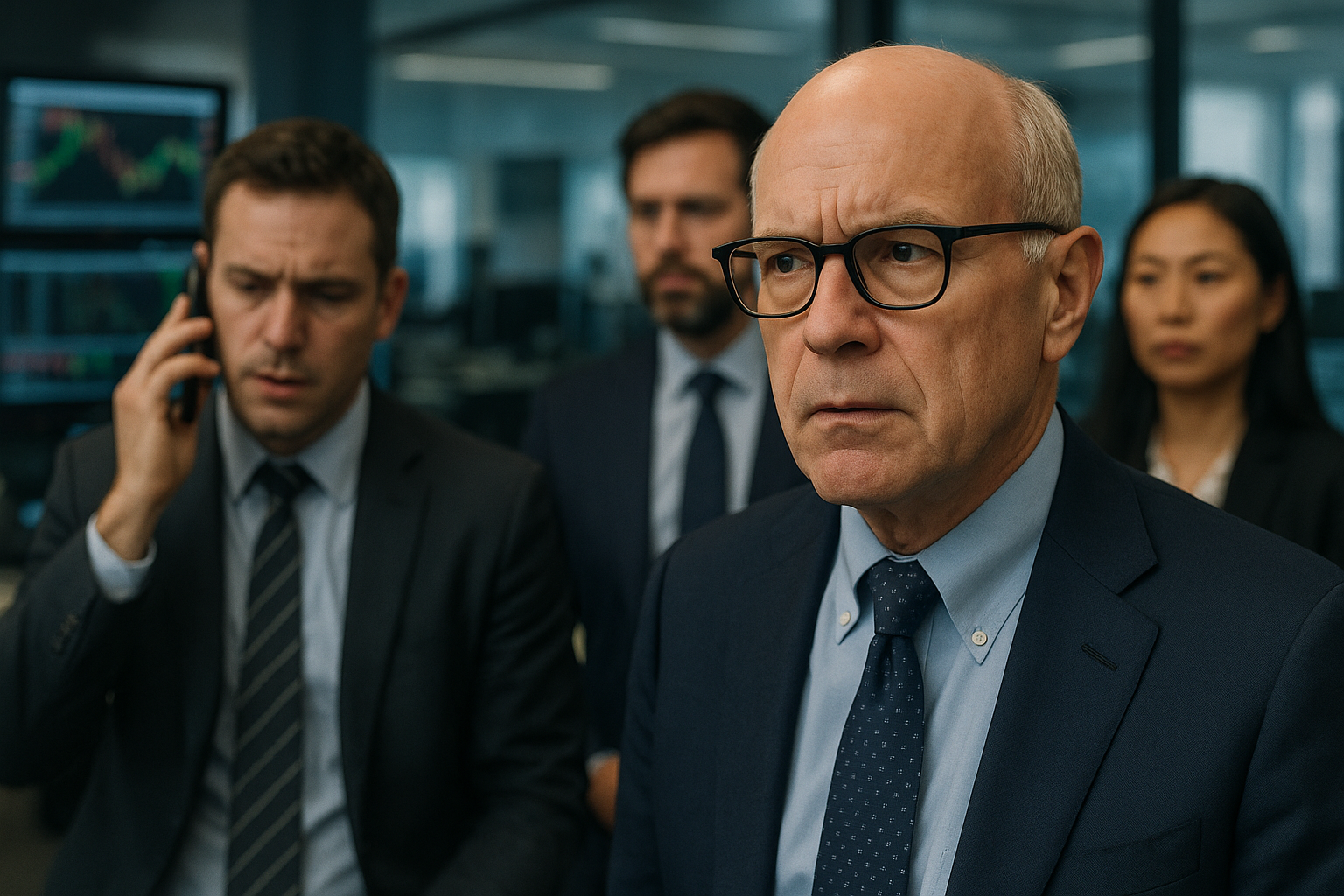
Kevin Warsh takes the gavel at the Federal Reserve carrying a thinner mandate than any new chair in recent memory: inflation back at multi-year highs, the bond market in revolt, and a committee that just dissented in numbers not seen since the early 1990s. His first FOMC meeting, scheduled for June 16-17, will set the tone for whether the new regime cuts, holds, or — as a growing chorus of veteran strategists argue — moves to hike.
The Inheritance
The Senate confirmed Warsh on May 13 to succeed Jerome Powell, whose chairmanship ended May 15. Powell will remain a Fed governor until early 2028. Warsh inherits a federal funds target range of 3.50% to 3.75%, held steady at the April 28-29 meeting in a vote that produced four dissents — the most since late 1992.
Governor Stephen Miran wanted to cut by a quarter point. Cleveland's Beth Hammack, Minneapolis's Neel Kashkari, and Dallas's Lorie Logan supported holding but objected to the statement's easing bias. CNBC characterized the split as a "family fight" Warsh must referee before he can chart a credible path forward.
Inflation Is the Problem Again
April CPI came in at 3.8%, the highest reading since May 2023, with markets bracing for further upside as the Iran conflict keeps Brent crude roughly 50% above pre-war levels and the Strait of Hormuz partially closed. The April FOMC statement acknowledged that "inflation remains somewhat elevated" while job gains have slowed — a stagflationary mix that complicates any easing case.
CME FedWatch puts the probability of a hold at the June meeting at 97%. December rate-hike odds, however, have climbed to roughly 50%, a remarkable repricing for a Fed that was widely expected to be cutting by now.
Yardeni's Contrarian Call
Veteran strategist Ed Yardeni broke from consensus this week with a forecast that the Fed will need to hike by a quarter point in July. Futures markets imply only a 4.2% chance of that move.
"The Fed must catch up to the bond market to avoid losing control of borrowing costs and to appease the Bond Vigilantes," Yardeni said. His argument: a preemptive tightening signal early in Warsh's tenure would cap long-end yields, restore credibility, and give the Fed flexibility later. Doing nothing, he warns, invites further market wrath in the form of escalating Treasury yields.
The Bond Market Speaks
The vigilantes are already moving. The 10-year Treasury yield touched a 16-month high of 4.7% on May 19 before easing to 4.65% on May 20. The 30-year reached 5.2%, an 18-year high. Long-end pressure reflects not only the inflation shock but skepticism that Warsh — confirmed on a narrow 51-45 vote amid controversy over his political proximity to the Trump administration — can deliver independent policy.
What to Watch
Warsh's confirmation hearing rhetoric emphasized restoring the Fed's inflation-fighting credibility. The June statement and dot plot will be the first real test. Three signals matter most: whether the easing bias is removed, whether the median 2026 dot drifts higher, and whether Warsh's press-conference framing leans hawkish enough to settle the long end. If the bond market doesn't get reassurance, Yardeni's July hike scenario stops looking contrarian and starts looking necessary.
Sources: CNBC ("Kevin Warsh comes into the Fed facing a big 'family fight'"; "The Fed will have to raise interest rates in July to appease 'bond vigilantes,' Yardeni says"), Federal Reserve Board (April 29, 2026 FOMC statement), Al Jazeera ("Kevin Warsh confirmed as new US Federal Reserve chair"), CNN Business ("Kevin Warsh confirmed as Fed chair").