
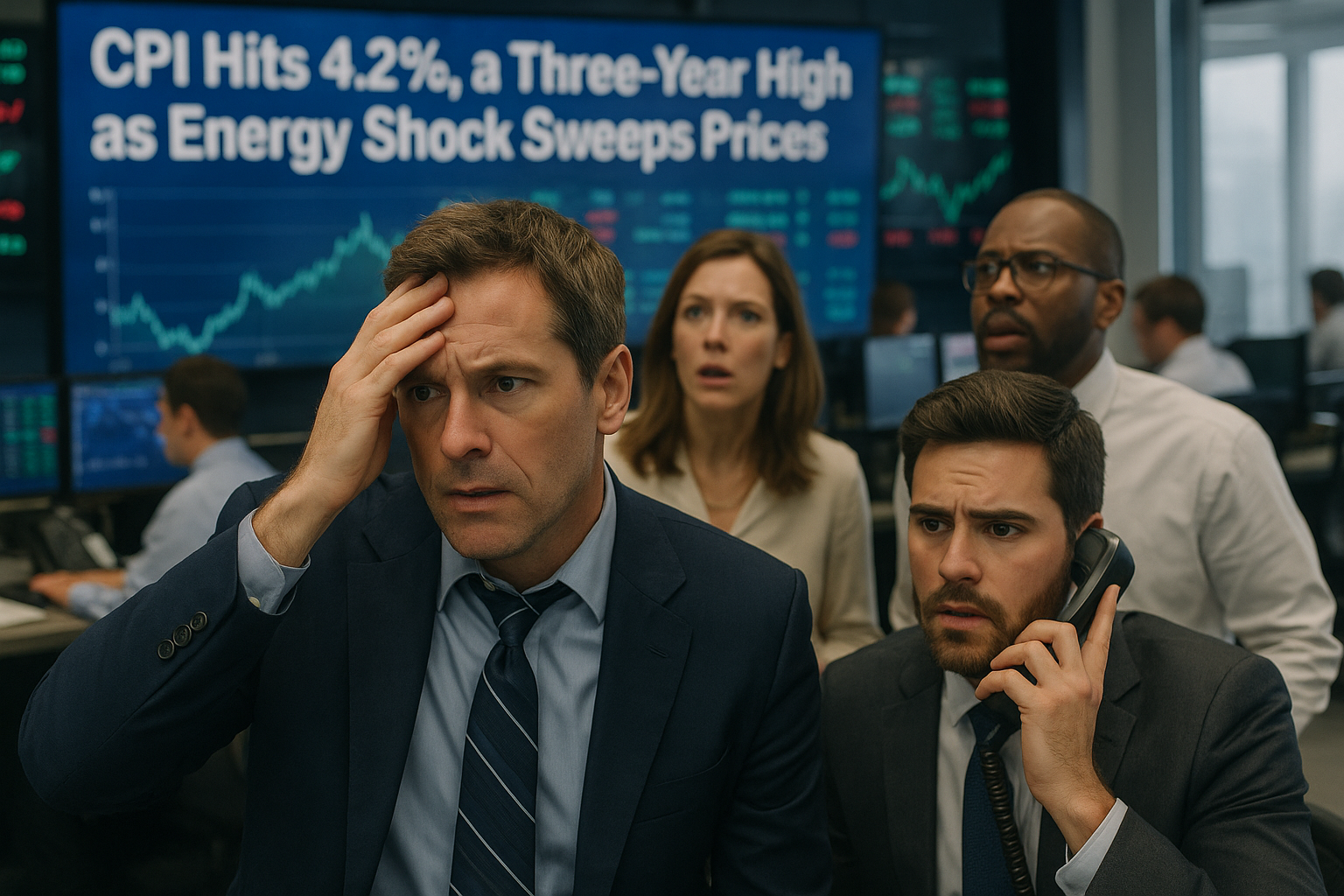
U.S. consumer prices accelerated at their fastest annual pace in three years in May, with the Consumer Price Index climbing 4.2% year-over-year — the highest reading since April 2023, according to the Bureau of Labor Statistics report released June 10. The print landed roughly in line with consensus but well above the Federal Reserve's 2% target, and the composition of the move has left policymakers in an uncomfortable spot heading into next week's FOMC meeting.
Energy Drives More Than Half the Increase
The headline figure is overwhelmingly an energy story. The BLS energy index rose 3.9% on the month, following gains of 3.8% in April and 10.9% in March, and accounted for more than 60% of the all-items monthly increase. On a year-over-year basis, energy costs are up 23.5%, a direct consequence of the supply disruption tied to the conflict with Iran and the near-total closure of the Strait of Hormuz.
Gasoline has borne the brunt of the shock. Pump prices jumped 7% in May alone and are now 40.5% higher than a year ago, according to the BLS release — the kind of swing that immediately shows up in household budgets and consumer sentiment surveys.
Core Tells a Calmer Story
Strip out food and energy and the picture changes considerably. Core CPI rose just 0.2% from April to May and 2.9% year-over-year, a reading that economists describe as far more reflective of the underlying inflation trend.
"The May CPI report shows inflation 4.2% annual rate, in line with forecasts," Morningstar noted in its post-release analysis, characterizing the headline spike as "energy-driven inflation" that is "contained, for now." The divergence between 4.2% headline and 2.9% core is the central tension policymakers must now navigate.
Fed Path Tilts Hawkish Ahead of June 17 Meeting
The Federal Reserve, chaired by Kevin Warsh, has held its benchmark rate at 3.5%–3.75% since December 2025. Officials have so far resisted reframing the energy spike as a reason to tighten, but the May data has clearly hardened the hawkish camp.
At the March meeting, Warsh said "the vast majority of officials do not have a rate hike in mind," while Chicago Fed President Austan Goolsbee acknowledged he could "see circumstances" for a hike if inflation becomes "out of control."
Markets are now repricing accordingly. According to the CME FedWatch tool, traders see a 38.9% probability of a rate hike by October, with the odds of at least one hike sometime this year now above 50%. Polymarket contracts on a 2026 Fed hike have moved in step.
What to Watch Next
The June 17 FOMC decision will be the first real read on how policymakers are interpreting the energy passthrough. Three questions dominate:
- Does the Fed treat the surge as a transitory supply shock, or as a signal that inflation expectations are slipping?
- How quickly does the gasoline spike feed into second-round effects in airfares, shipping, and services?
- If a credible Iran-Israel ceasefire holds, how fast does the energy premium unwind?
For now, the takeaway is straightforward: with headline inflation at a three-year high and gasoline up 40% year-over-year, the political and market pressure on the Fed to act has materially increased — even if the core data still argues for patience.
Sources: Bureau of Labor Statistics (CPI release, May 2026), CNBC ("CPI inflation report May 2026: Prices rose 4.2% annually"), CBS News, Morningstar ("May CPI Report: Energy-Driven Inflation Is Contained, for Now"), Benzinga, CME Group FedWatch tool, Polymarket.