
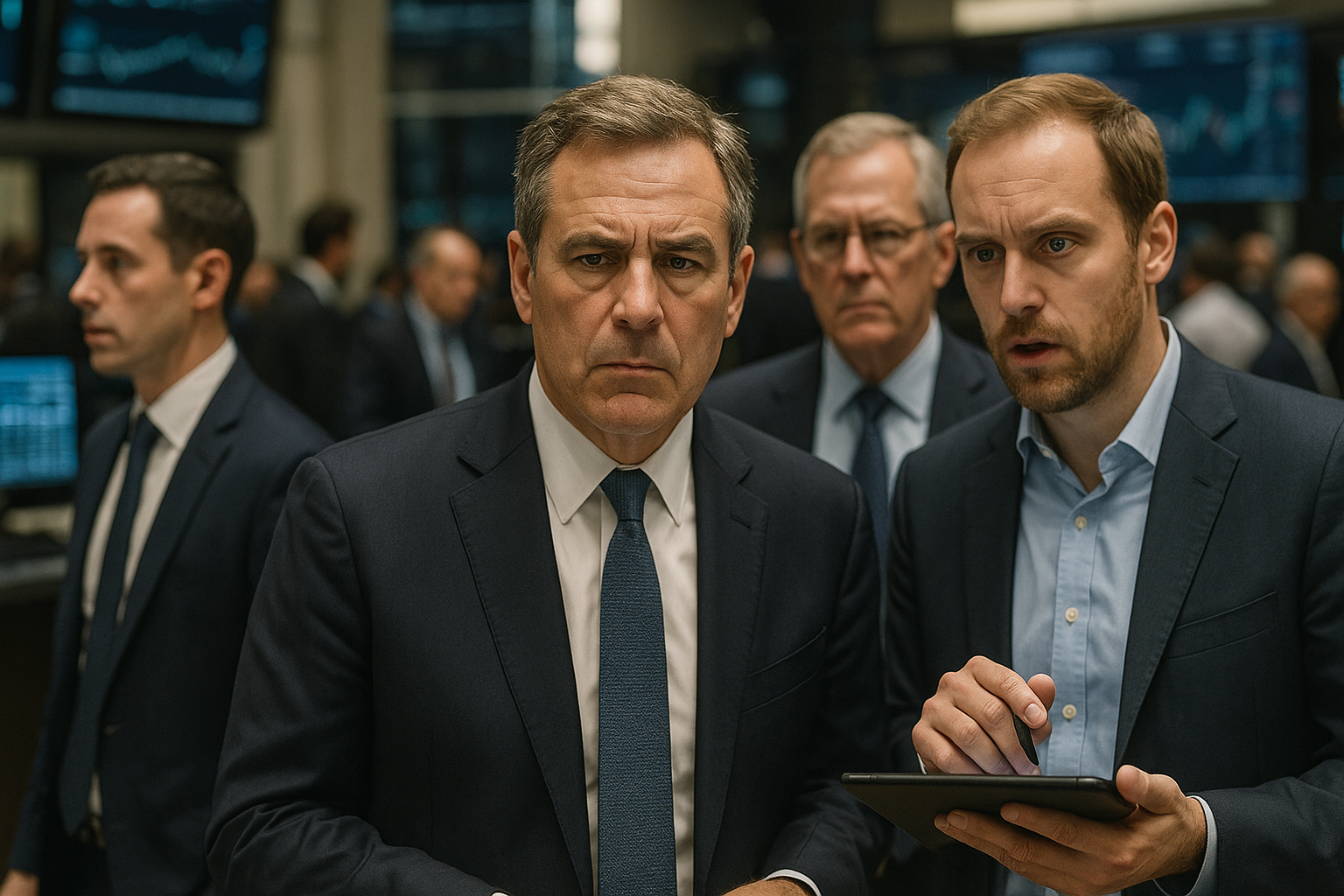
The Federal Reserve voted unanimously today to leave the federal funds rate unchanged at 3.50% to 3.75%, but Chair Kevin Warsh's debut meeting delivered a markedly hawkish surprise that sent stocks reeling and yields climbing. Nine of 18 FOMC participants now project a rate hike before year-end, and the post-meeting statement was stripped of the easing bias markets had grown used to.
It was the fourth consecutive hold and the first FOMC under Warsh, who replaced Jerome Powell earlier this year. Traders had priced in a 97% probability of no move, but the dot plot and statement language blindsided the consensus that the next move would still be a cut.
A Shorter, Tougher Statement
The new statement clocked in at roughly 130 words, less than half the length of recent FOMC communiqués that have typically run above 300 words. Gone were references to "additional rate adjustments." In their place: a flat declaration that "inflation remains elevated relative to the Committee's 2 percent goal, in part reflecting supply shocks that have driven price increases in certain sectors, including energy. The Committee will deliver price stability."
"It's a bit shorter, a bit simpler and it dispenses with some older language," Warsh told reporters at his first post-meeting press conference. He went further on the question of where rates are heading: "As a general proposition, forward guidance isn't the business we should be in." Warsh declined to offer a personal rate forecast and said current conditions are "not well suited" for guidance.
The Dot Plot Tells the Story
While the policy rate stayed put, the Summary of Economic Projections did the talking. Half of the 18 participants — nine officials — now see at least one quarter-point increase appropriate by December. That is a sharp reversal from the prior projection, which leaned toward modest cuts.
The vote itself was 12-0, but the underlying split among non-voting participants underscored how quickly the inflation narrative has shifted following May's 4.2% CPI print and recent energy shocks tied to the Persian Gulf.
Markets Whipsaw on Warsh's Debut
The reaction was swift. After steady trading into the 2 p.m. ET statement release, stocks slid as the press conference progressed. The S&P 500 fell roughly 0.6%, the Nasdaq Composite dropped 0.7%, and the Dow Jones Industrial Average shed about 160 points, or 0.3%, by mid-afternoon. Intraday lows were deeper, with the S&P down 1.12%, the Nasdaq off 1.04%, and the Dow lower by 0.93% as Warsh spoke.
Gold, which had pushed above $4,370 earlier in the session on safe-haven demand and pre-FOMC positioning, gave back gains but held above $4,330. The Russell 2000 underperformed, falling 0.87% as small-cap investors absorbed the prospect of a higher-for-longer policy rate.
Five Task Forces and a Reset
Warsh used the meeting to announce a broader institutional overhaul. He unveiled five new task forces that will review the Fed's monetary policy framework, communications, data sources, productivity and labor market analysis, and the causes of inflation. The move signals a clean break from Powell-era practices and suggests Warsh intends to remake the central bank's analytical machinery, not just its rhetoric.
For investors, the takeaway is unambiguous: the easing cycle that markets had been counting on for late 2026 is no longer the working assumption inside the Eccles Building. With energy-driven inflation still running hot and a Fed chair willing to talk about hikes on his first day, the bar for cuts has moved meaningfully higher.
Sources: TheStreet, CNBC, NPR, Fox Business, Fortune, CNN Business