
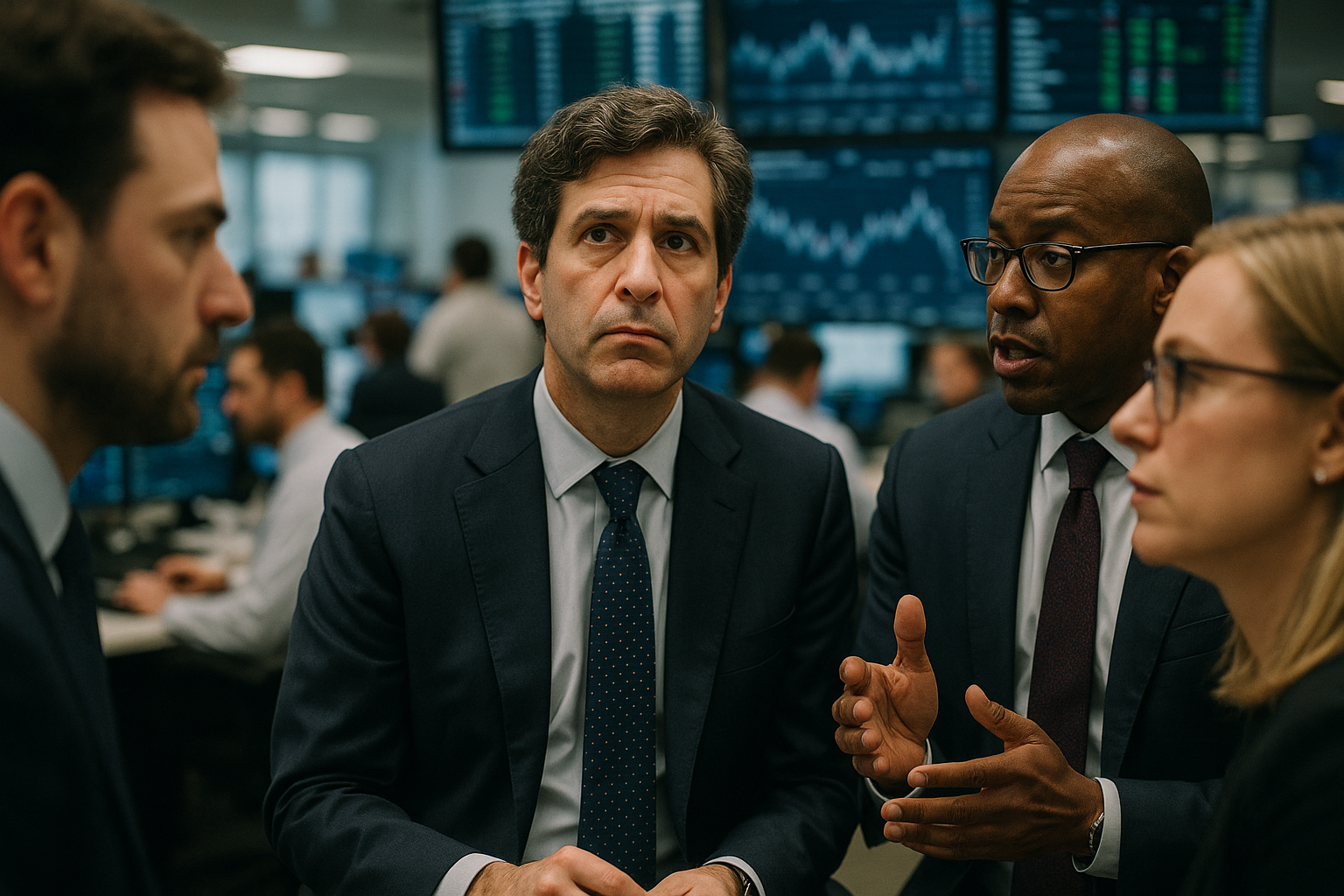
The Federal Open Market Committee is set to announce its July rate decision today at 2:00 p.m. ET, with Chair Kevin Warsh widely expected to hold the federal funds rate steady at 3.50%–3.75% for a fifth consecutive meeting. But beneath the anticipated status quo, an unusually vocal hawkish faction is pushing the committee toward a policy inflection point that could reshape markets before year-end.
A Close Call Masked by Consensus
Economists polled by FactSet overwhelmingly predict a hold, with more than three-quarters of respondents expecting the current target range to remain unchanged. Yet prediction markets are pricing in nearly a 30% probability of a surprise hike — an unusually elevated figure heading into a meeting that will not carry an updated Summary of Economic Projections or new dot plot.
The tension stems from persistent price pressures. Headline inflation printed at 4.2% following the Fed's June 17 meeting, when policymakers held rates in a unanimous 12–0 vote but delivered a hawkish shift in the dot plot. Warsh himself has publicly acknowledged that "prices are too high," a rare candid framing from a sitting Fed chair.
The Hawks Are Circling
Several regional Fed presidents and governors have signaled openness to tighter policy in recent weeks. Dallas Fed President Lorie Logan has argued rates should be "modestly" higher, while Cleveland Fed's Beth Hammack, Minneapolis Fed's Neel Kashkari, and Governor Christopher Waller have all indicated support for firmer policy should inflation prove sticky.
That constituency is large enough to produce meaningful dissents today, according to CNBC's live coverage of the meeting. A multi-member dissent in Warsh's first months as chair would be a notable break from the consensus-driven Powell era and could rattle a bond market that has largely priced in continuity.
Warsh's Balancing Act
Analysts at CNBC identified three reasons Warsh is likely to stand pat despite hawkish pressure. A hike would prejudge the outcomes of task forces Warsh recently created to rethink the Fed's approach to inflation, artificial intelligence, data infrastructure, and communications strategy. It would also draw immediate political fire from President Trump, who elevated Warsh in part on expectations of a more accommodative posture.
Complicating the picture, June's Consumer Price Index came in softer than feared, largely because energy prices retreated when tensions in the U.S.-Iran conflict briefly eased. That reprieve gave the committee cover to wait — but it also means any renewed escalation could quickly flip the calculus and raise the probability of a hike at the September meeting.
What Markets Are Watching
Beyond the rate decision itself, investors will parse Warsh's 2:30 p.m. press conference for language on the balance sheet, forward guidance, and the composition of any dissents. Equity markets have drifted sideways into the announcement, and the dollar index has firmed modestly on the hawkish chatter. A hold paired with tempered language could trigger a relief rally; a hold paired with multiple dissents and hawkish framing could do the opposite.
For retirement savers and long-duration bondholders, today's decision matters less than the trajectory Warsh sketches for the second half of 2026. With inflation running well above the 2% target and internal dissent building, the Fed's patience appears to be a finite resource.
Sources: CNBC, CBS News, The Motley Fool, CNN Business, Chase, Federal Reserve