
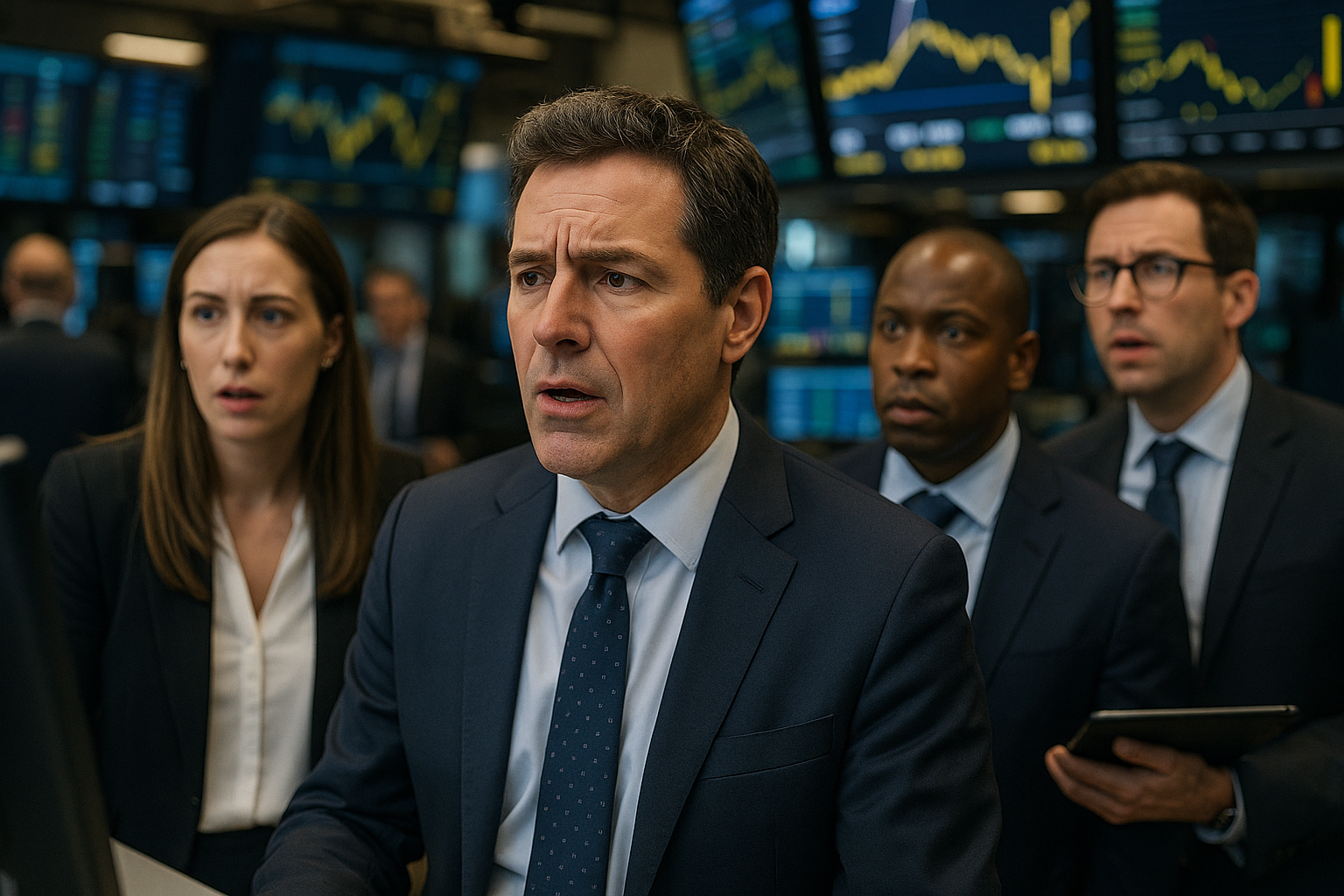
The number that decided next week's Federal Reserve meeting came in one tenth of a percentage point too high.
The Consumer Price Index rose a seasonally adjusted 0.4% in August, the Bureau of Labor Statistics reported Friday morning, leaving the annual rate at 3.4% for a second straight month. That headline figure matched forecasts. Core CPI, which strips out food and energy and is the measure the Fed actually steers by, rose 0.3% against a 0.2% consensus. The annual core rate eased to 2.4% from 2.5% in July — in line with estimates, but arriving on the back of the wrong monthly print.
Traders did not wait. Odds of a quarter-point increase at the September 15-16 meeting climbed to 82% shortly after the release, per CME Group's FedWatch tool as cited by Reuters, and CNBC reported the probability pushing toward roughly 90% as the session wore on. Markets had been pricing close to 70% the day before. The federal funds rate has sat in a 3.50% to 3.75% range for all of 2026.
Gasoline Did the Damage
Energy was the engine of the monthly increase. The energy index rose 2.1% in August and is up 16.3% over the past twelve months. Gasoline alone jumped 3.9% on the month and 27.4% on the year, accounting for more than a third of the entire all-items increase, according to the BLS release. That is the arithmetic consequence of crude trading above $100 through late August on escalating U.S.-Iran naval tensions, with Brent quoted above $103 early Friday.
Elsewhere the report was mixed. Shelter rose 0.3% for the month and 3.0% over the year — still the largest single weight in the index, and still decelerating. Food rose just 0.1%, with groceries flat and restaurant prices up 0.3%. Medical care actually fell 0.2% on the month, and motor vehicle insurance declined 0.8%.
Stocks Rallied Anyway
Equities read the report as a relief. The Dow Jones Industrial Average gained 483.34 points, or 0.93%, to 52,547.44. The S&P 500 and Nasdaq Composite each rose 0.8%.
The rally had less to do with inflation than with the barrel. West Texas Intermediate fell 3.27% to $99.13, breaking back below triple digits.
"Oil pullback probably driving rally more than CPI," said Dennis Dick of Triple D Trading, noting the roughly 3.5% decline in crude was the more significant move. Adam Sarhan of 50 Park Investments framed it differently: "Market is breathing a collective sigh of relief because inflation didn't exceed expectations."
Not everyone saw relief. "Inflation still too hot," said Skyler Weinand of Regan Capital. "Rate hike next week all but assured."
The bond market split along the same line. The policy-sensitive 2-year Treasury yield rose 4.4 basis points to 4.594%, pricing the hike. The 10-year fell 2.4 basis points to 4.92%. The dollar index was flat at 99.06.
Metals Bent, Then Recovered
Gold went into the print at its weakest level in more than a month. December futures opened at $4,359.40 per troy ounce, down 1.1% and the lowest since August 6, before recovering to $4,387.10 by 6:53 a.m. Eastern and finishing the session up 0.55% at $4,431.46. Silver futures opened at $64.14, off 1.2%, and steadied near $64.35.
For a metal facing a near-certain rate hike, holding above $4,400 is its own kind of statement.
Sources: U.S. Bureau of Labor Statistics (Consumer Price Index — August 2026), CNBC, Reuters, Benzinga, CME Group FedWatch, Yahoo Finance