
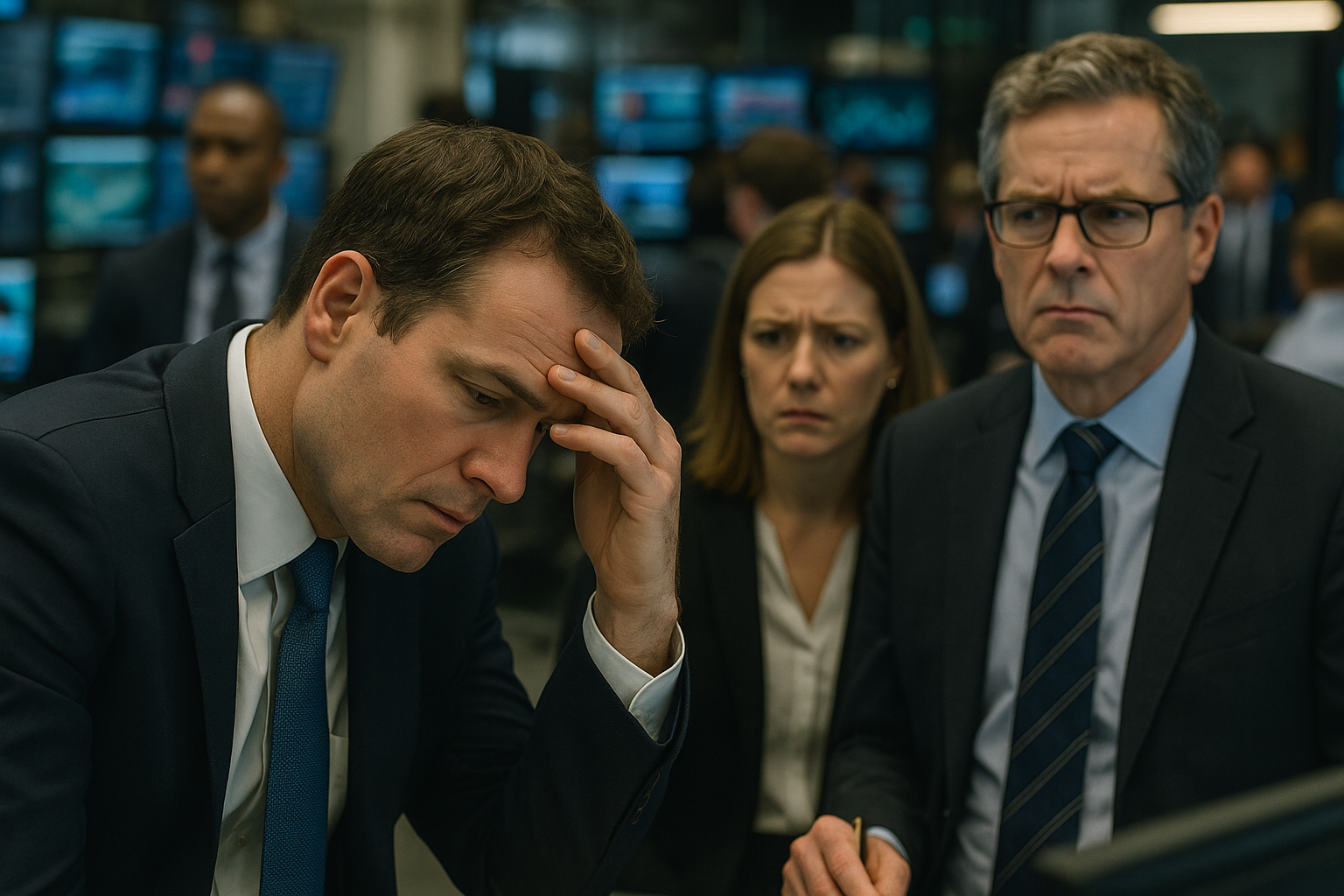
American consumers turned sharply more pessimistic in September, with The Conference Board's Consumer Confidence Index falling 6.7 points to 81.9 from 88.6 in August — a third straight month of deterioration and a reading that lands well below the levels typically associated with a comfortably expanding economy.
The release, published Tuesday at 10 a.m. ET, covered a survey period running through September 23 — a window that included the Federal Reserve's first interest rate increase since 2023 and a continued surge in fuel costs tied to the conflict in Iran.
Current Conditions Turn Negative
The Present Situation Index, which measures how consumers assess business and labor market conditions right now, dropped 7.9 points to 109.3. The detail beneath that number is the more striking part: consumers' net view of current business conditions fell to –1.9%, with 20.4% calling conditions "bad" against 18.5% calling them "good."
"Consumer appraisals of current business conditions became negative for the first time since September 2024," said Dana M. Peterson, chief economist at The Conference Board. "Perceptions of the current labor market also worsened, though remained within positive territory."
That labor market read is thinning out. The share saying jobs are "plentiful" slipped to 23.6% from 24.5%, while those saying jobs are "hard to get" rose to 21.9% from 20.3% — narrowing the closely watched labor differential to just +1.7%.
The Expectations Index, covering the six-month outlook, fell 5.9 points to 63.6. Net expectations for business conditions came in at –9.5% and for the labor market at –14.4%, both deeper in negative territory than August.
Prices Dominate the Write-In Responses
Inflation expectations moved the wrong way for the Fed. Consumers' average expectation for inflation over the next 12 months climbed 0.3 percentage points to 6.1%, with the median at 5.1%. Meanwhile, 68.4% now expect higher interest rates ahead — up 5.2 points in a single month.
Peterson pointed to what respondents wrote in unprompted: "References to prices, the high cost of goods and services, and oil and gas prices in particular, rose to new heights, reflecting September's surge in fuel costs."
The Conference Board also noted that the share of consumers describing their family's current financial situation as "bad" exceeded those saying "good" — only the second time that has happened in four years — and that more respondents now consider a U.S. recession "somewhat likely" over the next 12 months.
The reading echoes the University of Michigan's final September sentiment index, which fell about 7% from August to 48.1, its second-lowest level on record.
Housing Holds Up, Markets Shrug
A separate report Tuesday showed the S&P Cotality Case-Shiller 20-City index up 2.5% year over year in July, beating the 2.2% consensus and marking the strongest annual gain since May 2025. Chicago led at +6.9%, followed by New York at +5.8%; Seattle was weakest at –1.6%. The national index rose 1.9% — still behind July's 3.4% inflation rate, leaving home values lower in real terms for a 14th consecutive month.
Markets took the confidence miss in stride. The S&P 500 was up 0.1% in early trading, the Dow was off about 60 points and the Nasdaq rose 0.3%, while the 10-year Treasury yield held near 5.24% after touching 5.27% on Monday. West Texas Intermediate crude eased 1.5% to $91.17 and Brent slipped 1.6% to about $96.24.
For a Fed that lifted its target range to 3.75%–4.00% on September 16, the combination is the uncomfortable one: households reporting weaker conditions and weaker job prospects while simultaneously bidding up their own inflation expectations.
Sources: The Conference Board (via PR Newswire), Associated Press, Seeking Alpha, Newsquawk, CNBC, University of Michigan Surveys of Consumers