
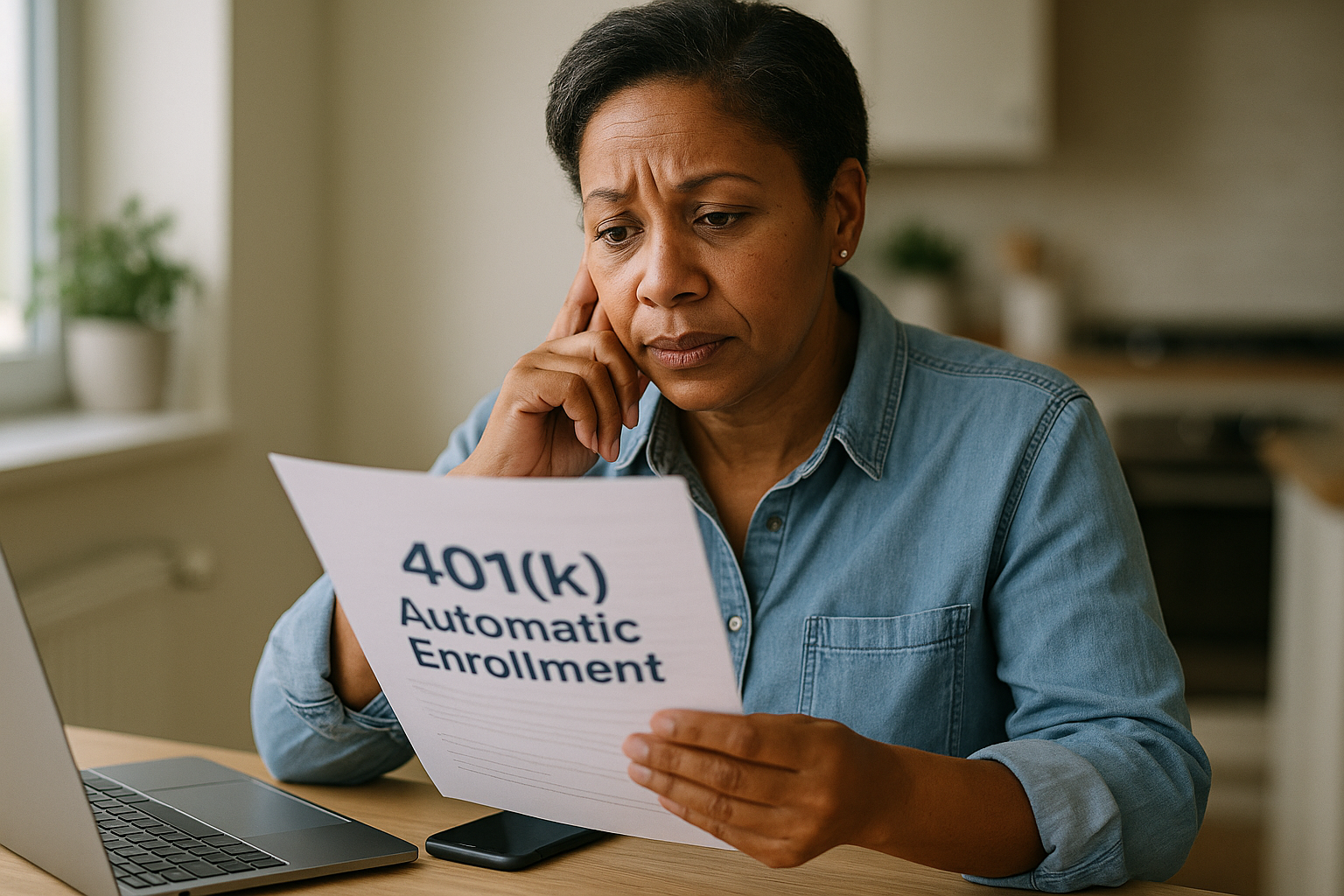
Understanding the New 401(k) Auto-Enrollment Rules
Starting in 2025, the SECURE 2.0 Act requires most new 401(k) and 403(b) plans to automatically enroll eligible employees at a contribution rate between 3% and 10% of their salary. This represents a significant shift in how Americans save for retirement.
What This Means for Your Paycheck
For many workers, this change comes at a challenging time. With inflation still elevated and many households struggling to make ends meet, an automatic reduction in take-home pay—even for retirement savings—can feel like an additional burden.
Key Points from the Video
The video highlights several important considerations:
- Automatic opt-in vs. opt-out: While you can opt out, the default is now enrollment
- Escalation provisions: Many plans will automatically increase your contribution by 1% annually
- Impact on budgets: Workers need to plan for reduced take-home pay
The Long-Term Perspective
Despite short-term budget challenges, research consistently shows that automatic enrollment significantly improves retirement outcomes. Workers enrolled automatically are much more likely to stay enrolled and build meaningful retirement savings.
What You Can Do
- Review your budget: Understand how the contribution will affect your monthly finances
- Consider staying enrolled: Even small contributions compound significantly over time
- Adjust if needed: You can modify your contribution rate or opt out entirely
- Take advantage of matching: Ensure you're capturing any employer match
Important Disclaimer
This content is for educational purposes only and does not constitute financial advice. Retirement planning decisions should be made in consultation with qualified financial professionals who understand your specific situation.