
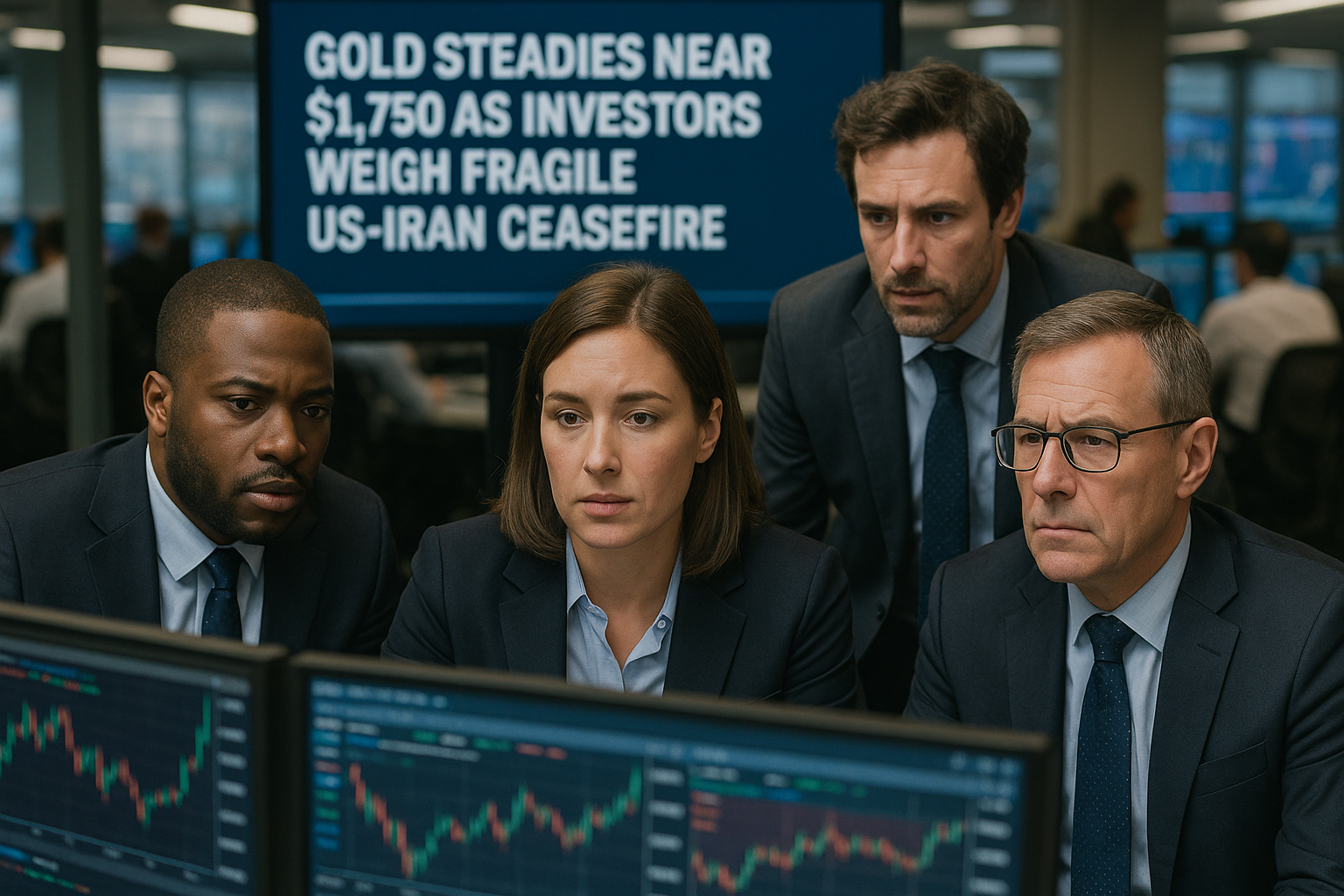
Gold prices held steady near $4,750 per ounce on Thursday as investors carefully assessed the durability of a fragile two-week ceasefire between the United States and Iran, with markets bracing for critical peace talks scheduled for this weekend in Pakistan.
A Volatile Week for Gold
The precious metal has experienced significant swings this week following the surprise announcement of a US-Iran truce on Tuesday. Spot gold initially surged more than 3% to reach its highest level since March 19, climbing to $4,779.19 per ounce before pulling back.
As of Wednesday's close, gold was trading at $4,743 per ounce, representing a $59 decline from the previous session but still posting impressive yearly gains of nearly 50% compared to the $3,175 price point recorded one year ago.
"Gold buyers are carefully reclaiming the narrative this week with higher lows every day helped by the tentative ceasefire," said independent metals trader Tai Wong. "Expect a significant battle ahead of $5,000; a break back above could re-ignite the bull run."
Ceasefire Brings Mixed Signals
The two-week truce between Washington and Tehran triggered immediate relief across financial markets. Oil prices plunged 18% while stock futures rallied, reflecting reduced geopolitical risk premiums. The US dollar fell 0.71% on Wednesday to a four-week low, making dollar-denominated gold more attractive to holders of other currencies.
David Meger, director of metals trading at High Ridge Futures, explained the dynamic: "As we've seen tensions in the Middle East de-escalate, there has been a little higher expectation of potentially seeing lower interest rates at some point, and the dollar came under pressure," which has kept gold well supported.
However, analysts cautioned that the peace remains tenuous. Edward Meir, an analyst at Marex, noted that while "the ceasefire is calming markets and easing pressure," the situation could quickly reverse. "There are so many elements that need to be negotiated. They could easily unravel, and it could be a short-term recovery in all the markets. We're still not out of the woods."
Eyes on Weekend Peace Talks
Market participants are closely watching reports that President Trump is preparing military options should peace negotiations in Pakistan this weekend fail to produce lasting results. This uncertainty has prevented gold from experiencing a more substantial pullback despite the initial relief rally.
BMO Capital Markets noted that precious metals are "positioned for further upside as long as positive conflict developments persist," though they cautioned that crude prices are unlikely to normalize immediately given persistent regional tensions.
Federal Reserve Implications
The ceasefire has reignited speculation about potential Federal Reserve rate cuts. Michael Brown of Pepperstone observed that "central banks may look through temporary inflation, lowering near-term tightening odds." However, he warned of "significant risk if the ceasefire breaks, returning markets to prior playbook—higher oil, dollar strength, and pressure across assets."
Gold's recent performance comes after a turbulent period that saw the metal decline 11% over the past month—its worst monthly performance since the early 1980s—driven by forced selling to meet liquidity needs during the height of the conflict.
Investment Outlook
Despite short-term volatility, leading financial institutions including JPMorgan and Goldman Sachs expect gold to fluctuate within a $4,000 to $6,300 range, supported by continued central bank purchases and ongoing geopolitical uncertainty. While global central bank gold purchases slowed in January 2026, demand has been spreading to new regions, with Malaysia and South Korea resuming reserve increases alongside China's continued accumulation.
For investors, gold's 49% year-over-year gain underscores its role as a hedge against both inflation and geopolitical risk—a dual purpose that appears likely to sustain demand regardless of how weekend negotiations unfold.
Sources: Fortune, Kitco News, Bloomberg, CNBC