
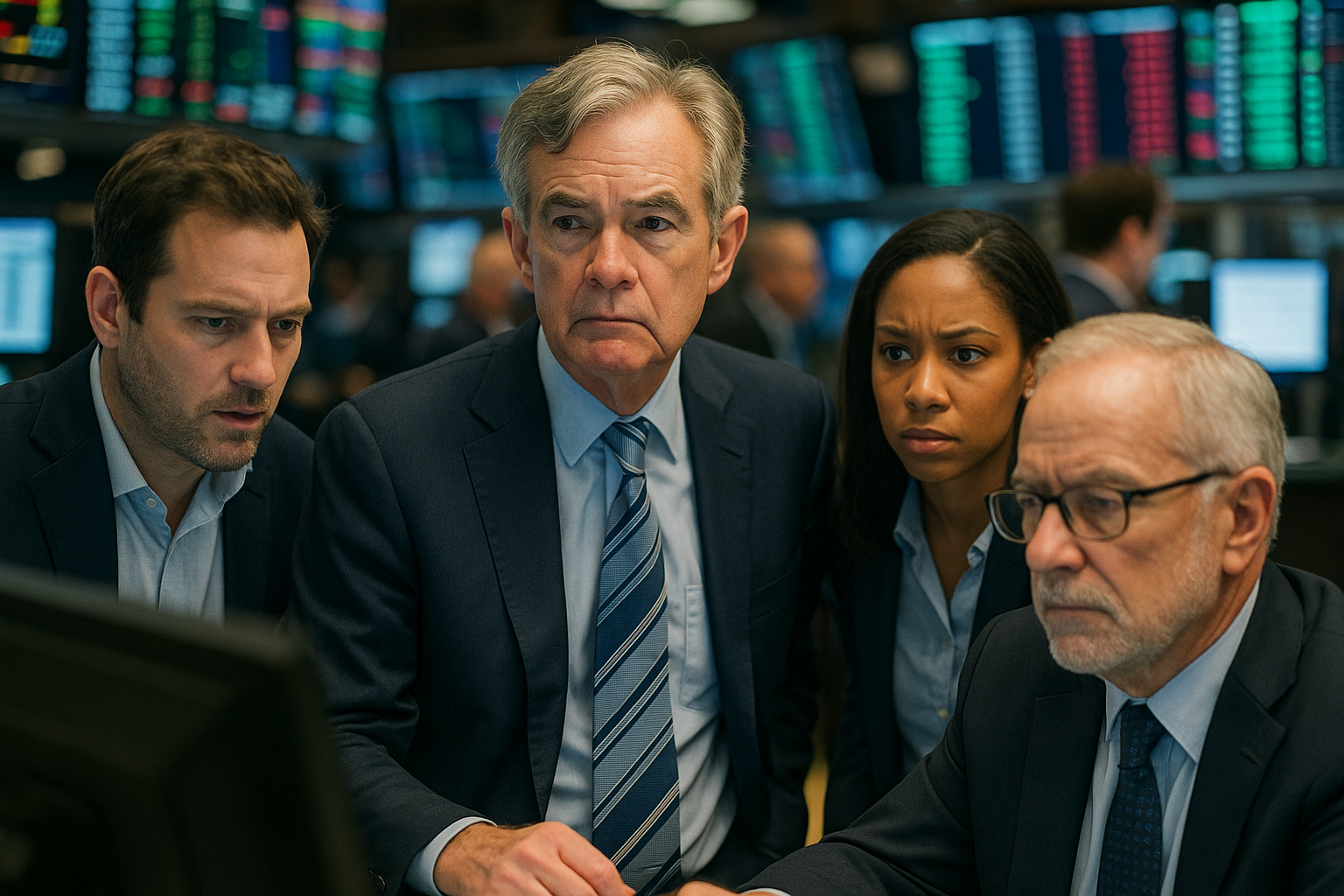
The Federal Reserve's policy-setting committee convenes next Tuesday and Wednesday for what Wall Street increasingly views as another exercise in patience. With the federal funds rate anchored at 3.5%-3.75% since the March meeting, markets are pricing in virtually no chance of a move at the April 28-29 gathering — and Chair Jerome Powell's recent remarks suggest he is content to let the current stance do the work.
Inflation Runs Hot, but Core Stays Tame
The central bank's task has been complicated by a jolt to headline inflation. Consumer prices rose 0.9% month-over-month in March, the largest monthly increase since 2022, driven almost entirely by gasoline and energy components tied to the Middle East conflict. Yet core CPI, which strips out food and energy, climbed just 0.2% — a sign that the underlying inflation pulse remains contained even as the pump price stings consumers.
That bifurcation is central to the Fed's current thinking. Policymakers have repeatedly described energy-driven spikes as "transitory" in nature, provided inflation expectations stay anchored. So far, they have.
Powell: Rates Are "In a Good Place"
In a conversation at Harvard University in late March, Powell delivered perhaps the clearest signal yet that the Fed sees no urgency to act. He described the current rate range as "in a good place" and argued that tightening now would do little to blunt an oil-driven price shock, given the lag with which monetary policy affects the real economy.
"The right move is to look beyond the short-term gyrations of the energy market and concentrate on the Fed's goals of stable prices and low unemployment," Powell said, per CNBC's coverage of the event. Traders evidently agreed: the implied probability of a rate hike by December collapsed to just 2.2% following the speech.
Wall Street Lines Up Behind a Pause
J.P. Morgan Global Research expects the Fed to remain on hold at the April meeting and through the balance of 2026, projecting no move until a possible 25 basis-point hike in the third quarter of 2027. That forecast is notably more hawkish than the committee's own Summary of Economic Projections from March, which still penciled in one rate cut for 2026 and another for 2027.
The tension between those paths is the story of this meeting. A further escalation in energy costs — or any sign that inflation expectations are becoming unanchored — could push the Fed toward a more defensive posture. Conversely, a meaningful weakening in the labor market would strengthen the doves' case for delivering that long-signaled cut sooner rather than later.
What to Watch Next Week
Investors will scrutinize three elements on Wednesday afternoon: the language around energy pass-through in the statement, any shift in the committee's characterization of the labor market, and Powell's tone in the press conference. Absent a hawkish surprise, the meeting is likely to reinforce what markets already believe — that the Fed intends to move slowly, deliberately, and only when the data clearly demand it.
For the Treasury market, the dollar, and gold alike, a steady-handed pause with measured guidance would validate the current equilibrium. Any deviation would not.
Sources: J.P. Morgan Global Research, CNBC, Federal Reserve Board, Yahoo Finance, The Harvard Crimson