
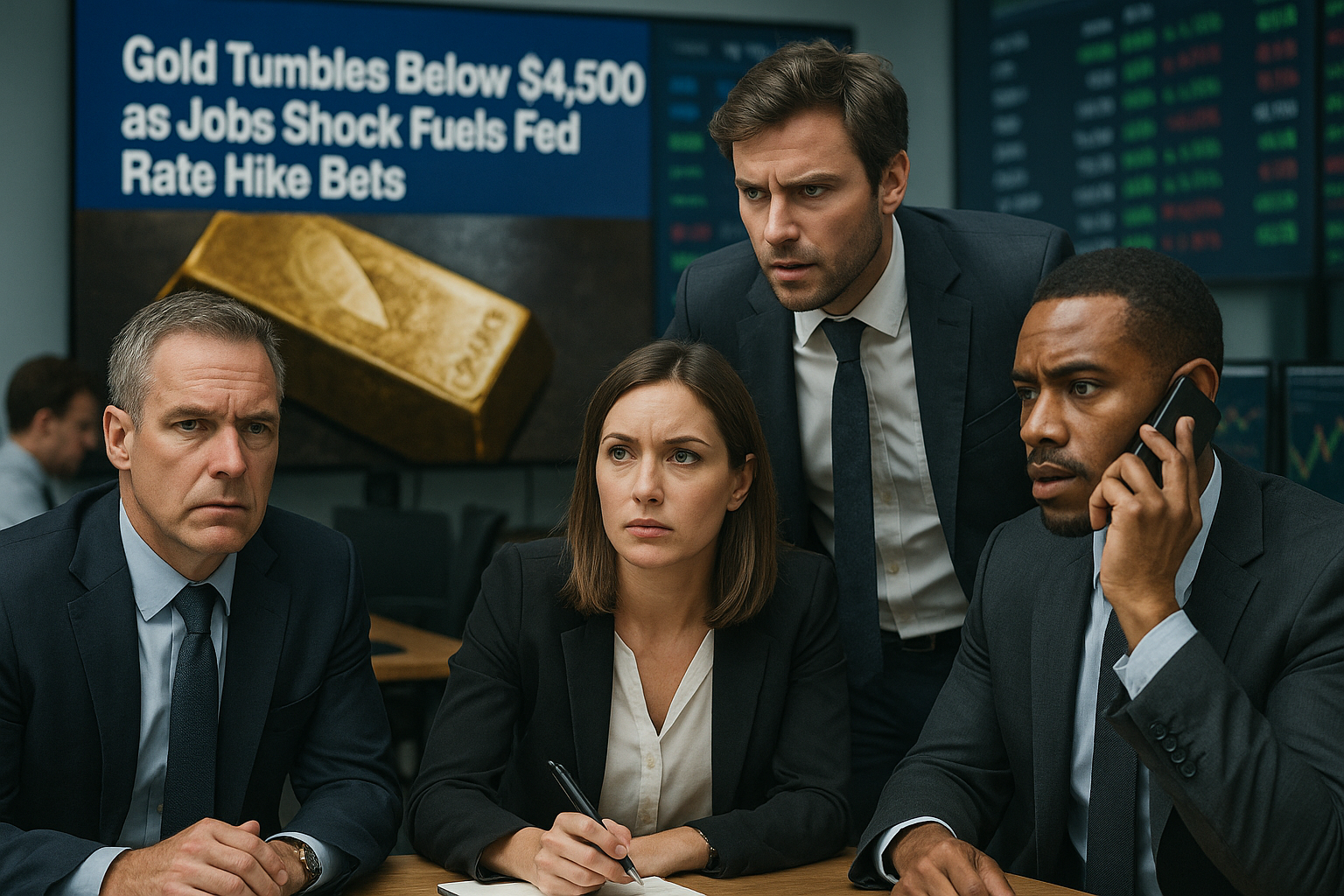
Gold Erases 2026 Gains After Hawkish Jobs Surprise
Gold prices plunged on Friday, with spot bullion trading around $4,463 per ounce after the U.S. Bureau of Labor Statistics reported a far stronger-than-expected May employment report. London gold lost roughly 3.9% from last Friday's close, shedding more than $100 per troy ounce and printing its lowest London 3pm auction fix since the first trading day of the year.
The sell-off effectively wiped out gold's year-to-date gains, even as the metal remains roughly 30% higher than where it traded twelve months ago. Silver tracked gold lower in sympathy as traders reassessed the path of U.S. interest rates.
May Payrolls Blow Past Estimates
U.S. employers added 172,000 jobs in May, more than double the consensus estimate among economists surveyed ahead of the release. The print pushed the three-month average hiring pace back toward levels typical of the decade before the COVID-19 pandemic, signaling that the labor market has shaken off earlier signs of softening.
Federal Reserve Governor Christopher Waller said policymakers now see the job market as largely stable and view containing persistently high inflation as the central bank's main priority. That shift in tone marks a sharp departure from the easing bias that had dominated rates markets earlier in the spring.
Warsh Confronts an Early Test
The data arrived just days before newly installed Federal Reserve Chair Kevin Warsh, a Trump appointee, presides over his first FOMC meeting on June 16–17. Markets had broadly expected Warsh to steer the committee toward lower borrowing costs, but the hawkish jobs surprise has flipped the script.
Fed funds futures now imply roughly even odds of a rate hike at the December 8–9 meeting, with investors fully pricing in at least one hike by early 2027. Some traders are even assigning a meaningful probability to a hike before year-end as Warsh balances White House pressure for cheaper borrowing against the inflation backdrop.
Oil, Iran, and the Inflation Equation
The repricing has been amplified by the U.S.–Iran military conflict that escalated in late February 2026. Rising crude prices have supercharged inflation expectations, paradoxically turning what would normally be a bullish geopolitical backdrop for gold into a headwind, as the resulting Fed hawkishness lifts real yields and the dollar.
Analyst Outlook Remains Constructive Longer Term
Despite Friday's slide, longer-term forecasts have not budged meaningfully. J.P. Morgan Global Research continues to project gold averaging $5,055 per ounce by the fourth quarter of 2026 and rising toward $5,400 per ounce by the end of 2027, citing structural central bank demand and persistent geopolitical risk.
Spot gold near $4,500 still leaves the metal more than 30% above its level a year ago, and analysts note that any softening in upcoming CPI or PCE data could quickly reverse the hawkish repricing now weighing on bullion.
Why It Matters for Investors
For portfolio allocators, the move is a reminder that gold's path higher is rarely linear. The metal's role as an inflation hedge can be temporarily overwhelmed when stronger growth pulls real yields higher and the Federal Reserve turns more hawkish. Retirement-focused investors holding precious metals for diversification should expect continued volatility through Warsh's first FOMC meeting and into the December decision.
Sources: Bloomberg, Reuters, BullionVault Gold News, J.P. Morgan Global Research