
The U.S. labor market delivered a sharp upside surprise on Friday, with the Bureau of Labor Statistics reporting that nonfarm payrolls rose by 172,000 in May — more than double the 80,000 Dow Jones consensus and above every forecast in the Bloomberg survey. The unemployment rate held at 4.3 percent, unchanged for the eleventh straight month inside a narrow 4.3 to 4.5 percent band that has prevailed since July 2025.
The report marked the clearest sign yet that the labor market may be breaking out of the lackluster hiring stretch that defined much of the past year. Combined with upward revisions to March and April, the picture that emerged was of a U.S. economy with more momentum than Wall Street had penciled in heading into the Federal Reserve's June 16-17 meeting.
Revisions Lift the Two-Month Trend
The BLS revised March payrolls up by 29,000 to 214,000, and April was revised up by 64,000 to 179,000. Together, the two months are 93,000 higher than previously reported, recasting what had looked like a softening trend into a steadier picture of job gains running near 175,000 a month.
Hiring was concentrated in a familiar set of sectors. Leisure and hospitality led with 70,000 new positions — five times its trailing twelve-month average of 14,000 — driven mostly by food services and drinking places (+48,000). Local government added 55,000 jobs, health care added 35,000, and manufacturing eked out a 7,000 gain. Financial activities was the weak spot, shedding 22,000 positions.
Wages Still Trail Inflation
Average hourly earnings rose 3.4 percent from a year earlier, a pace that continues to lag the most recent CPI prints. The gap between wages and prices remains the central squeeze on household real incomes, even as headline employment surprises to the upside. ADP-tracked pay for job changers slowed to 6.5 percent in May, while job stayers saw raises of 4.4 percent — both still positive in real terms but trending lower than a year ago.
Yields Surge as Fed Cut Bets Unwind
The bond market took the report as a clean rejection of the near-term rate-cut thesis. The 10-year Treasury yield jumped 5 basis points to 4.534 percent, its highest level since May 21. The 2-year yield, more sensitive to Fed policy expectations, climbed 7 basis points to 4.115 percent, the highest since May 20.
With the federal funds rate currently sitting at 3-1/2 to 3-3/4 percent and inflation still running above target, the combination of solid job growth and sticky price pressures makes a June cut effectively off the table. A handful of strategists noted that the print arguably reopens the question — first floated by Trump Fed nominee Kevin Warsh — of whether the next move could be a hike rather than a cut.
Stocks Slide on "Good News Is Bad News"
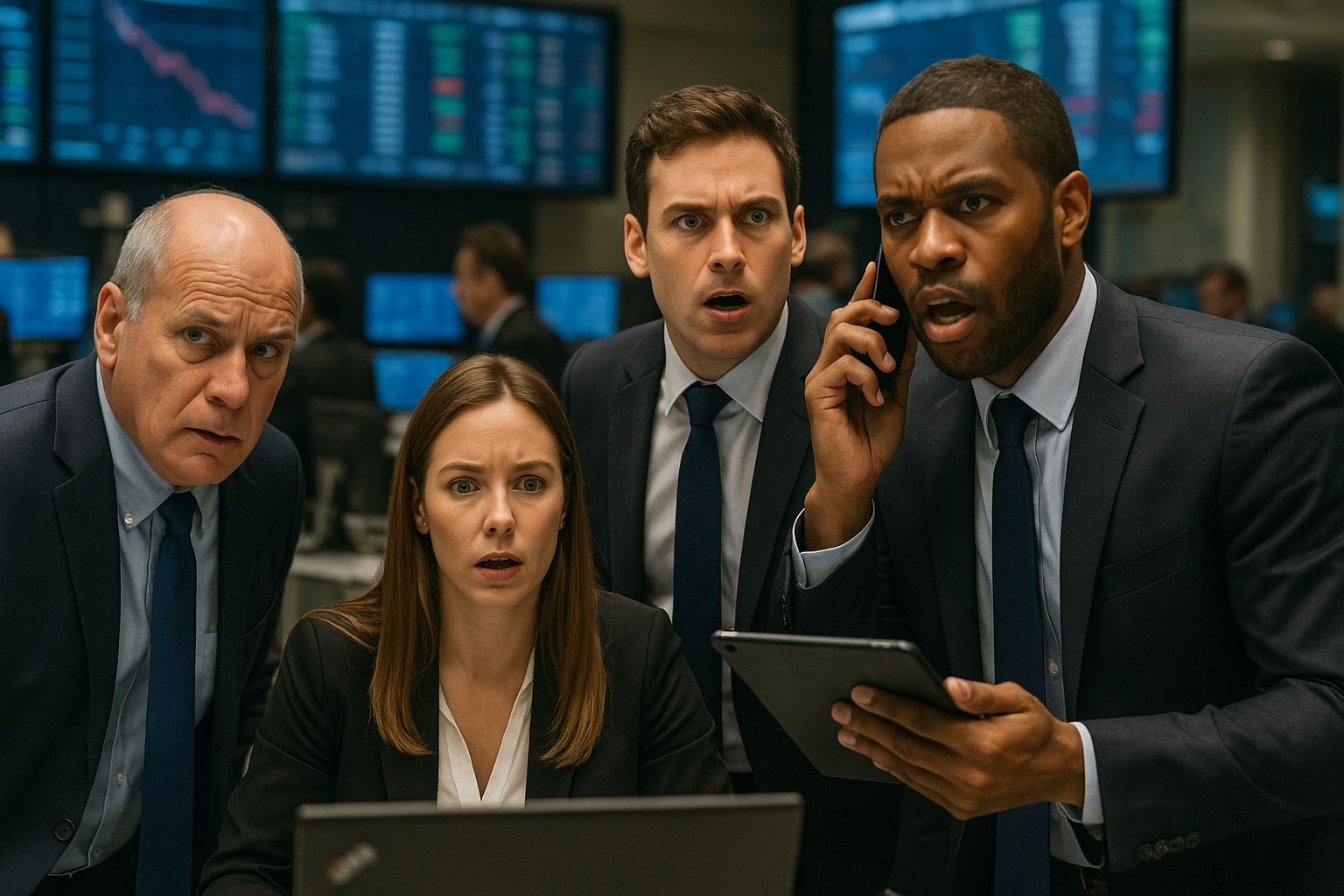
Equities reacted the way the rates market often dictates when growth surprises in a tight policy regime. The S&P 500 fell about 1 percent, the Nasdaq Composite shed 1.6 percent, and the Dow Jones Industrial Average dropped 151 points, or roughly 0.3 percent. Chip stocks remained the heaviest drag a day after Broadcom's guidance shock, while rate-sensitive growth names came under additional pressure from the yield move.
The selloff capped a week in which the S&P 500's brief excursion above 7,600 gave way to a rotation out of long-duration tech and into defensives. With the May employment data now in the books, attention turns to the next CPI release and the FOMC's June 16-17 decision — where markets are increasingly pricing in another extended pause, and a non-trivial tail risk of a hawkish surprise.
Sources: Bureau of Labor Statistics, CNBC, Bloomberg, Yahoo Finance, TheStreet, Charles Schwab