
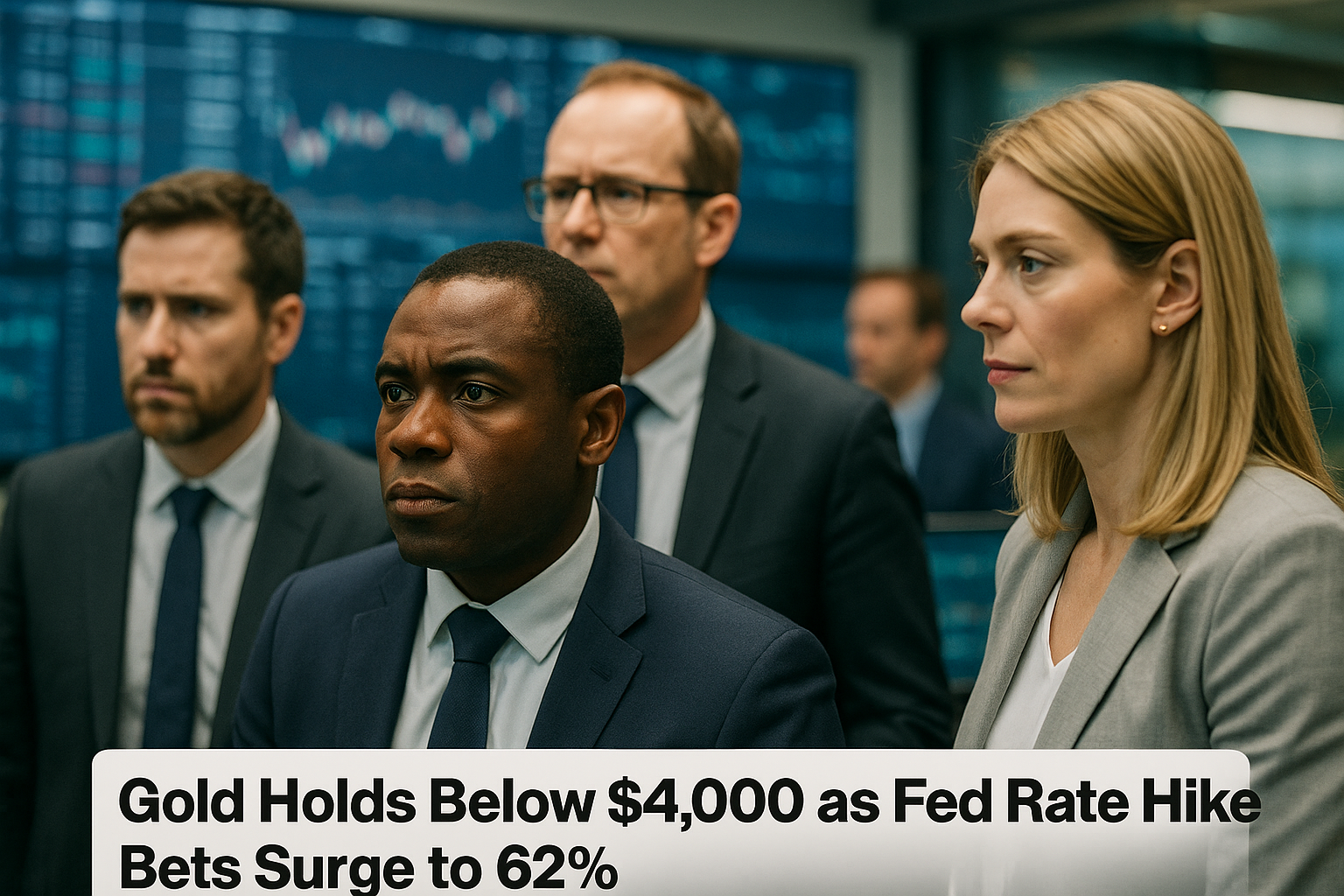
Gold opened the final trading day of June near $4,051 an ounce, clinging to a level it had not seen in seven months as traders absorbed a sharp shift in Federal Reserve rate expectations. The metal slid below the psychologically critical $4,000 mark on June 25 — the first such break since November 2025 — and is on track for a fourth consecutive monthly loss of more than 10%.
A Reversal Driven by Hawkish Fed Bets
Just five months ago, gold was setting an all-time high of $5,589. Today's print represents a roughly 25% retreat from that January 28 peak, with the bulk of the damage concentrated in the past four weeks. The catalyst has been a wholesale repricing of the Federal Reserve's policy path. Futures markets are now assigning a 62% probability to the first of three rate hikes arriving at the September FOMC meeting, a stunning reversal from spring expectations that had still favored cuts.
Goldman Sachs, which had been one of the more dovish institutional voices early in the year, pulled every 2026 rate cut from its forecast last week and pushed its easing timeline out to June and December 2027.
Energy-Driven Inflation Forces the Fed's Hand
The proximate cause is inflation. US headline CPI accelerated to 4.2% in May 2026 — the highest reading since April 2023 — propelled by a 23.5% jump in energy costs tied to disruption from the Iran conflict. Even with a US-Iran ceasefire announcement sending oil lower in recent sessions, traders are reluctant to fade the inflation impulse until they see follow-through in the PCE data.
"Amid this sideways plod, and with growing worries that the Fed might have to respond to energy-driven inflation with hikes, gold is on the back burner for most investors at the moment," said Greg Shearer, head of Base and Precious Metals at J.P. Morgan.
The damage has been even more acute in silver, which on June 24 closed below $60 an ounce for the first time since December 2025. The white metal is down close to 20% year-to-date, lagging gold's roughly 8% YTD decline. The gold-to-silver ratio has expanded back to 61.7, a level historically associated with silver underperformance.
Sentiment Shift: Buying Dips to Selling Rallies
The character of the market has changed. For most of the past two years, dips in gold were aggressively bought by central banks and Western retail investors hedging fiscal and geopolitical risk. That bid has thinned considerably.
"The market had been looking to the psychological $4,000 per ounce milestone for support following the Iran peace deal, but sentiment has swung to selling on price rallies," noted Suki Cooper, analyst at Standard Chartered Bank.
What the Big Banks Still See
Despite the rout, sell-side year-end forecasts remain striking. Goldman Sachs revised its 2026 year-end target to $5,400. J.P. Morgan stands near $6,000. Wells Fargo is at $6,100 to $6,300, while Bank of America sits at $6,000, UBS at $5,500, and Morgan Stanley at $5,200. Every one of those numbers sits 25% to 44% above the current spot price — a divergence that either signals a dramatic second-half rally or the largest collective miss in recent bullion forecasting history.
For now, the tape belongs to the dollar bulls and the rate-hike camp. Gold needs either a softer inflation print or an unexpected pivot in Fed communication to recover the $4,000 handle with conviction.
Sources: CNBC, Yahoo Finance, J.P. Morgan Global Research, GoldSilver.com, Standard Chartered Bank