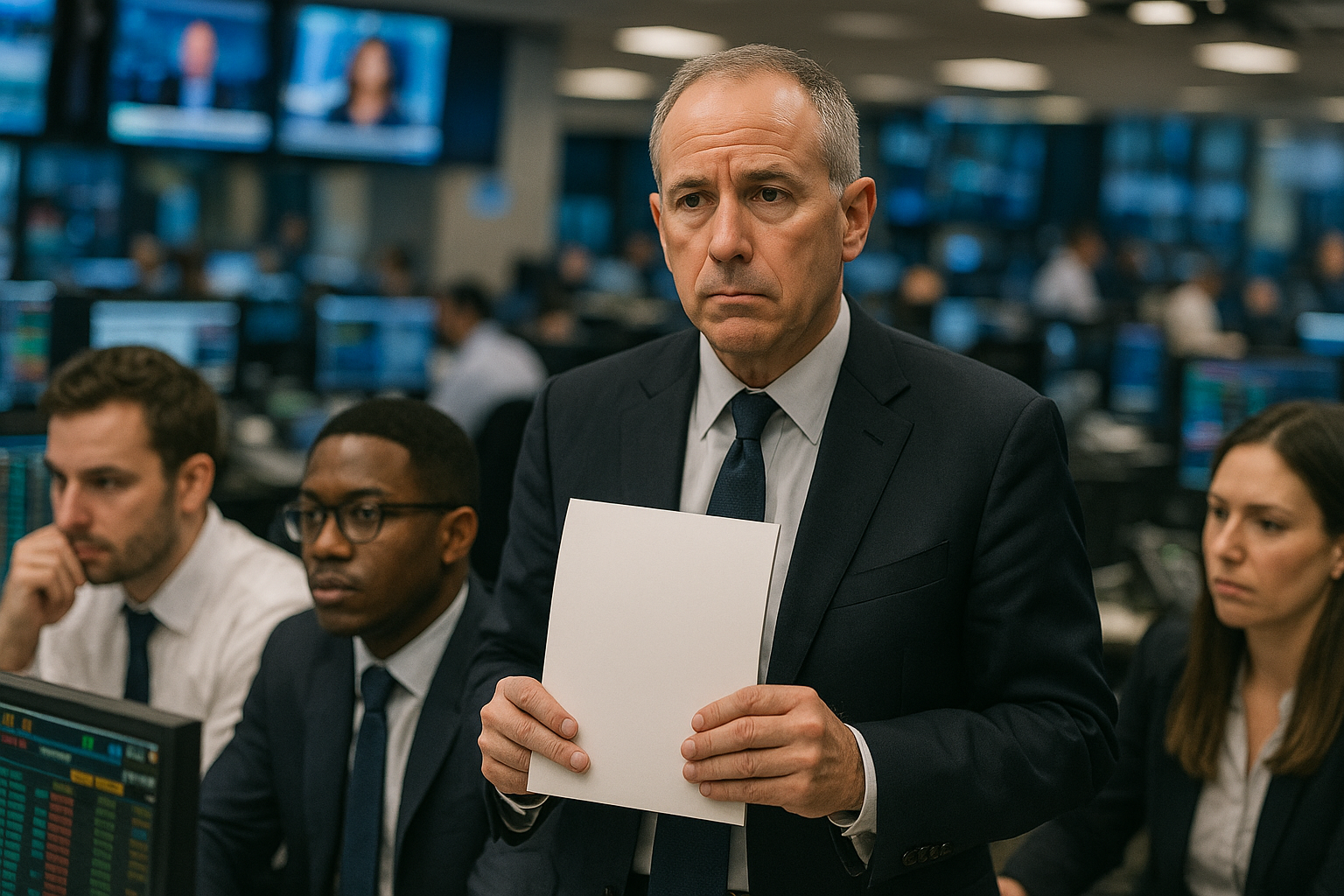
Kevin Warsh will stand up in the Jackson Lake Lodge conference room on the morning of Friday, Aug. 28, and give his first keynote address as chair of the Federal Reserve. Asked recently what he plans to say, Warsh described the speech as "a blank piece of paper right now."
That is not a throwaway line. It is the whole method.
A Chair Who Removed the Cue Cards
The Federal Reserve Bank of Kansas City hosts the 2026 Economic Policy Symposium from Aug. 27 to Aug. 29, under the theme "Financial Innovation: Implications for Payments and Policy." The topic points at digital payments, central bank digital currencies and how financial technology is reshaping monetary transmission. Markets will be listening for something else entirely: any hint about Sept. 16.
Warsh has spent his first months in the job dismantling the communications apparatus his predecessors built. The July 29 post-meeting statement was markedly shorter than the norm, and forward guidance was stripped out of it. Under that approach, incoming data — not official commentary — carries the signal. Traders who spent a decade parsing adverbs in the FOMC statement now have very little to parse.
Three Dissents Already on the Board
The July meeting held the federal funds target range at 3.50% to 3.75%, but the vote was 9-3. Cleveland's Beth Hammack, Minneapolis' Neel Kashkari and Dallas' Lorie Logan each dissented in favor of a 25-basis-point increase. Warsh had said he wanted a "good family fight" on the committee; he got one.
His own framing at the press conference was uncompromising. He reiterated the absolute nature of the 2% inflation target and warned that households, businesses and investors should not read the past five years of above-target inflation as evidence the Fed tolerates it. The Fed, he said, will "deliver price stability."
The Data Cut the Other Way
Then July's numbers arrived and complicated the case for tightening. Nonfarm payrolls fell by 23,000 against forecasts for an 85,000 gain. July CPI, released Aug. 12, showed headline inflation at 3.4% year over year, down from 3.5%, with core at 2.5%, down from 2.6%. Wholesale prices were flat.
Hike odds collapsed. CME's FedWatch tool had priced a roughly 67% chance of a September increase on July 31; by Aug. 7 that had fallen to 44.4%, and mid-August readings put the probability of a hold near 69%. Not every forecaster agrees the question is settled — Forbes contributor Bill Conerly published an Aug. 12 argument that the Fed hikes in September despite the cooler CPI print.
What Markets Are Doing Meanwhile
Stocks are drifting rather than repricing. Monday's session left the S&P 500 up 0.04%, the Nasdaq up 0.23%, the Dow down 0.25% and the Russell 2000 down 0.51%, with the S&P sitting just off a record set last week after a third straight weekly gain. Big-box retailers — Walmart, Target, Lowe's and Home Depot — report this week.
The metals are less ambivalent. Gold traded near $4,395 an ounce Monday, up 0.45%, with silver around $65.48. Thirty-year Treasury yields remain near 20-year highs, which is its own comment on how durably the bond market believes inflation has been beaten.
The September FOMC meeting runs Sept. 15-16 and carries an updated Summary of Economic Projections. Between now and then, Jackson Hole is the only scheduled opportunity for the chair to shift expectations — and he has built a communications regime designed not to.
Sources: Federal Reserve Bank of Kansas City, CNBC, Fox Business, Yahoo Finance, Forbes, U.S. Bank, Fortune, CME Group FedWatch