
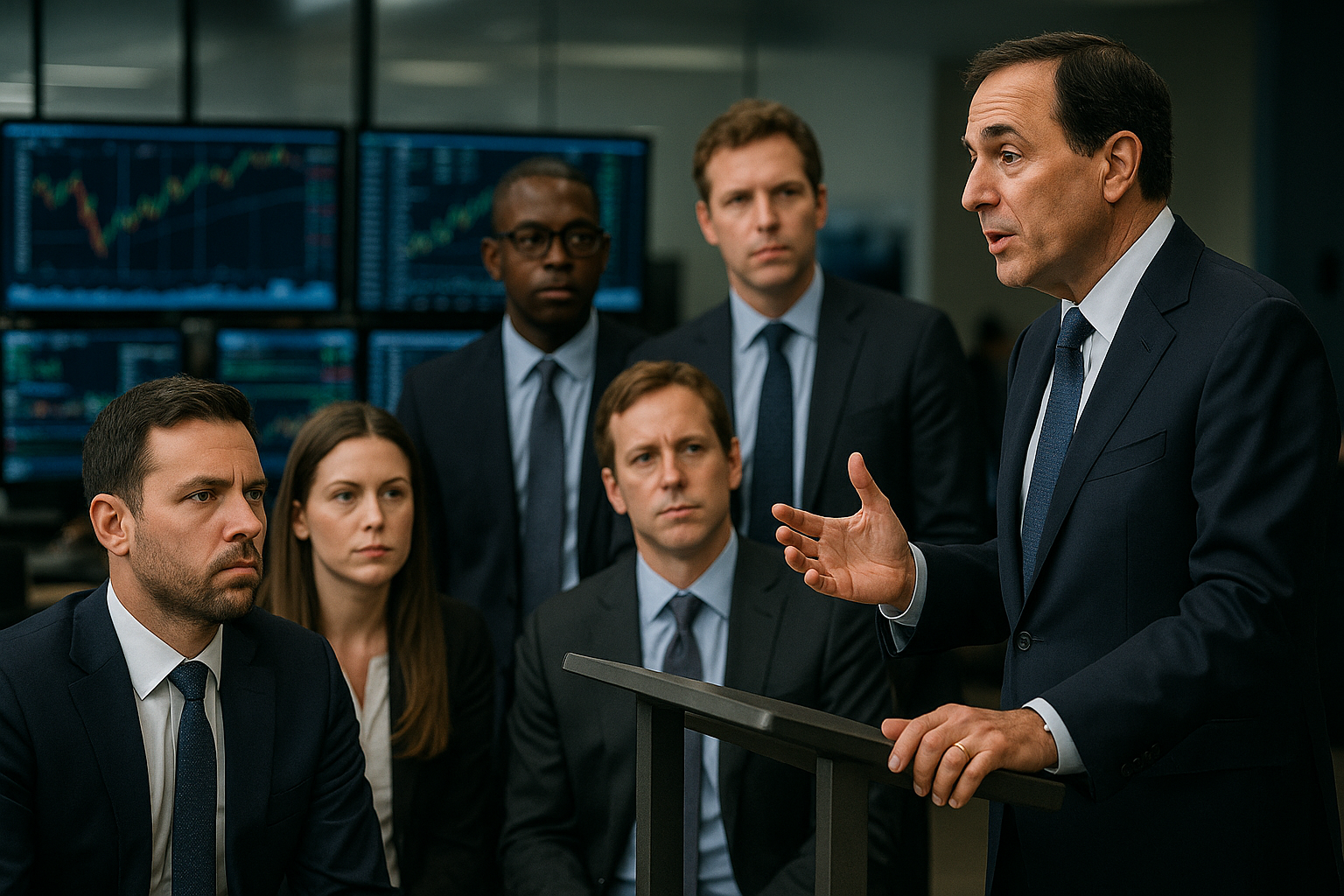
Two of the most consequential events on the August calendar collided at 10 a.m. Eastern on Friday. The Bureau of Labor Statistics released its preliminary benchmark revision to nonfarm payroll employment at the same moment Federal Reserve Chair Kevin Warsh stepped to the podium in Jackson Hole for his first keynote as chair.
The revision broke a four-year pattern. For the first time since 2022, the BLS marked payrolls higher rather than lower — a reversal from a stretch in which every annual benchmark came in below the prior estimate, culminating in a February 2026 correction that erased nearly 900,000 jobs from the record. Last year's preliminary estimate for March 2025 cut 911,000 jobs, the largest downward revision since at least 2000.
Why the Direction Matters More Than the Magnitude
The preliminary benchmark reconciles the monthly Current Employment Statistics survey against the Quarterly Census of Employment and Wages, which covers roughly 95% of U.S. jobs. It is not applied to the official data immediately; the final revision lands with the January 2027 release and applies to the employment level as of March 2026.
The BLS has credited improved business response rates to the monthly CES survey for narrowing the gap. That technical footnote carries policy weight. If the survey had been understating employment, then the labor-market softness that shaped Fed calibration over the past year was partly a measurement artifact — and the question of how tight the labor market actually is reopens at the worst possible moment for a chair being asked to explain his reaction function.
Warsh Speaks Into a Hawkish Setup
Warsh, who became the Fed's 17th chair on May 22, has drawn sustained criticism for declining to spell out the conditions under which he would move rates in either direction. He delivered his remarks with inflation running at 3.4%, the 30-year Treasury yield near its highest level since 2007, and futures pricing roughly a 34% chance of a hike at the September 15–16 meeting. Some of his colleagues are already calling for the first increase since July 2023.
"He needs to signal to the market that he's not interested in sort of starting an extended rate-hike campaign," analyst Tom Essaye said ahead of the speech. Analysts at ING flagged the benchmark release as a volatility risk in its own right, cautioning that "any surprises here could be noteworthy."
Markets Held Their Breath
Equities were narrowly mixed into the speech. The S&P 500 traded at 7,740.45, up 0.12%, while the Dow Jones Industrial Average added 112.23 points to 53,681.67, a gain of 0.21%. The Nasdaq Composite was effectively flat at 26,548.90, and the Russell 2000 slipped 0.16% to 3,009.66.
Gold held at $4,661.50 an ounce, down 0.05%. Crude oil fell 1.23% to $82.50 a barrel and bitcoin dropped 1.48% to $79,030.50. Ten- and 30-year Treasury yields were little changed but remained close to multiyear highs.
Single stocks supplied the day's volatility. PayPal tumbled 13% after Advent and Stripe walked away from a $50 billion acquisition bid. Marvell Technology fell 7% following earnings, while Nvidia extended Thursday's gains on bullish long-term guidance.
Sources: Bureau of Labor Statistics (Current Employment Statistics benchmark releases), Yahoo Finance, CNBC, FXStreet, CoinDesk