
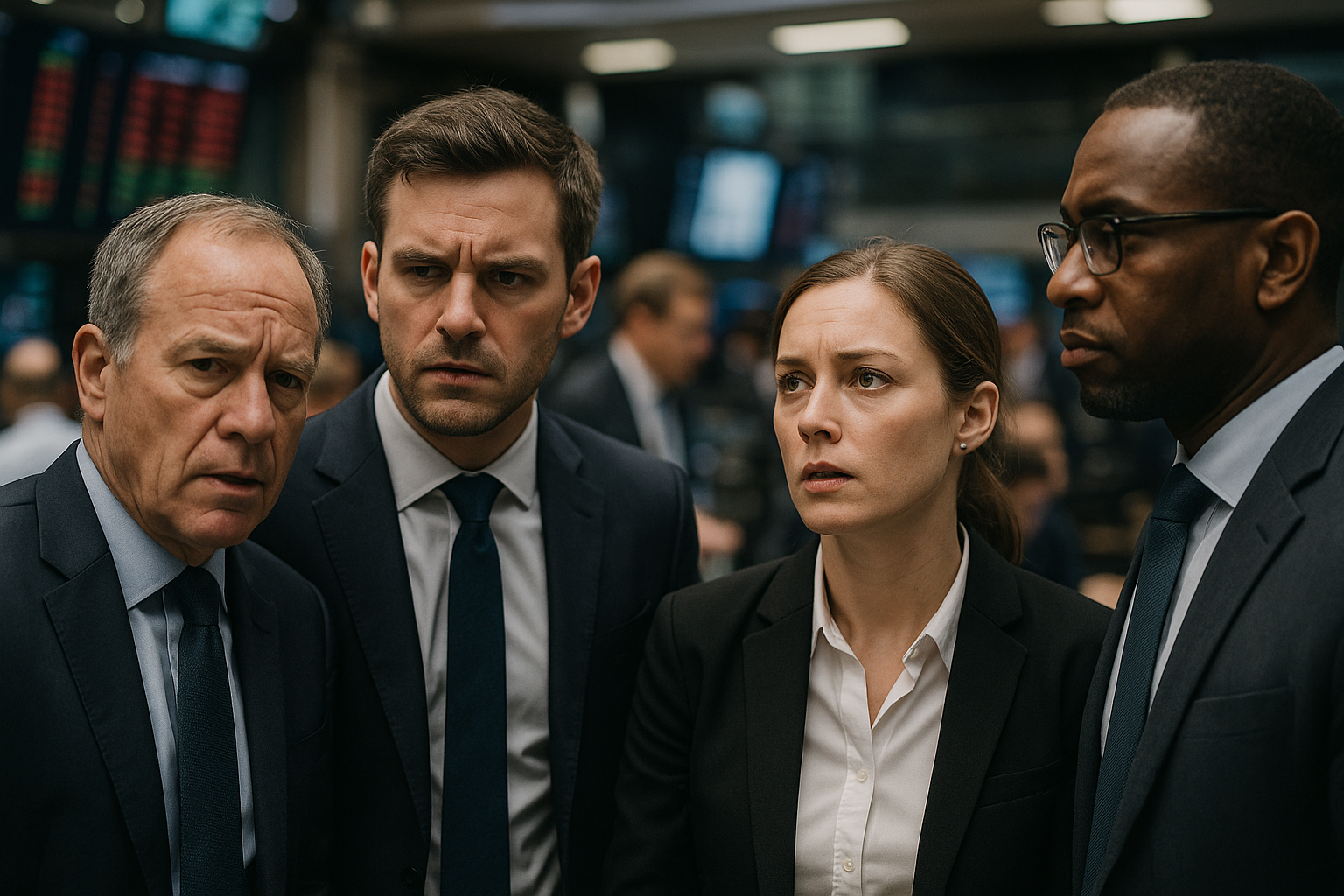
Gold gave up a week of patient accumulation in a single hour on Friday. Spot bullion, which had spent the morning holding above $4,600, fell more than 1% to trade near $4,552 an ounce after Federal Reserve Chair Kevin Warsh delivered his first Jackson Hole keynote — touching an intraday low around $4,531 as traders repriced the odds of a September rate increase.
Silver, which had actually firmed into the speech — quoted at $71.13 an ounce at 7:57 a.m. ET after opening near $69.35 — surrendered the move and settled back toward $69.
Warsh Named His Priority
The speech, titled "In Our Time," was billed as a test of whether the new chair would finally define his reaction function. He declined — deliberately.
"Forward guidance as a regular practice was adopted by my colleagues and me during the Global Financial Crisis," Warsh said. "It was essential at the time... but I believe that the practice has overstayed its welcome." He argued the tool "risks creating ambiguity in the name of clarity" and can "inhibit our own freedom to make the right calls," adding the memorable line that markets should not "indulge a regime in which market participants are looking primarily to the Fed for their next trade."
What he gave instead was a ranking. On employment, Warsh was untroubled: "Labor markets are quite stable. The jobless rate, at 4.1 percent, remains low by historical standards," he said, concluding that conditions are "consistent with full employment."
On prices, the tone changed. The 12-month change in the PCE price index "stands at 3.7 percent, while the six-month change is 4.1 percent," he noted — the six-month run rate accelerating away from target, not toward it. Summer's softer CPI and PCE prints, he said, "do not tell me that underlying trends have meaningfully improved."
Then the sentence that moved the tape: "We must be confident that underlying inflation is moving to our objective, clearly and at sufficient speed. Otherwise, we have work to do."
Markets Did the Math
Traders read the ranking as a tightening bias. Futures pricing for a hike at the September 15–16 meeting jumped to roughly 57%, a striking swing from the start of the session, when a hold was the near-70% favorite.
"Warsh's comments signal that he is leaning toward a rate hike," said Adam Button, chief currency analyst at investingLive.com.
The front end of the curve moved first. The 2-year Treasury yield rose 9.5 basis points to 4.325%, a one-month high, while the 10-year added 2.8 basis points to 4.7% and the 30-year held roughly flat at 5.189% — a flattening consistent with tighter policy now rather than higher inflation later.
Equities faded into the close. The Dow finished roughly flat, the S&P 500 slipped about 0.3% and the Nasdaq fell 0.5%.
What It Means for Bullion
Gold's 2026 advance has leaned on the assumption that the hiking cycle was finished. Warsh did not say it was — but he removed the comfort of hearing that it was. Higher real short-term rates raise the carrying cost of a non-yielding asset, and the front-end selloff is the cleanest expression of that.
"We are entering a new era of monetary policy, one defined by less signaling, greater emphasis on real-time data," said Jeffrey Roach, chief economist at LPL Financial. For gold holders, that means the next repricing arrives with the data, not with the guidance.
Sources: Federal Reserve Board (Chairman Warsh, "In Our Time," Jackson Hole Economic Policy Symposium, August 28, 2026), Kitco News, CNBC, Reuters, Yahoo Finance, USAGOLD