
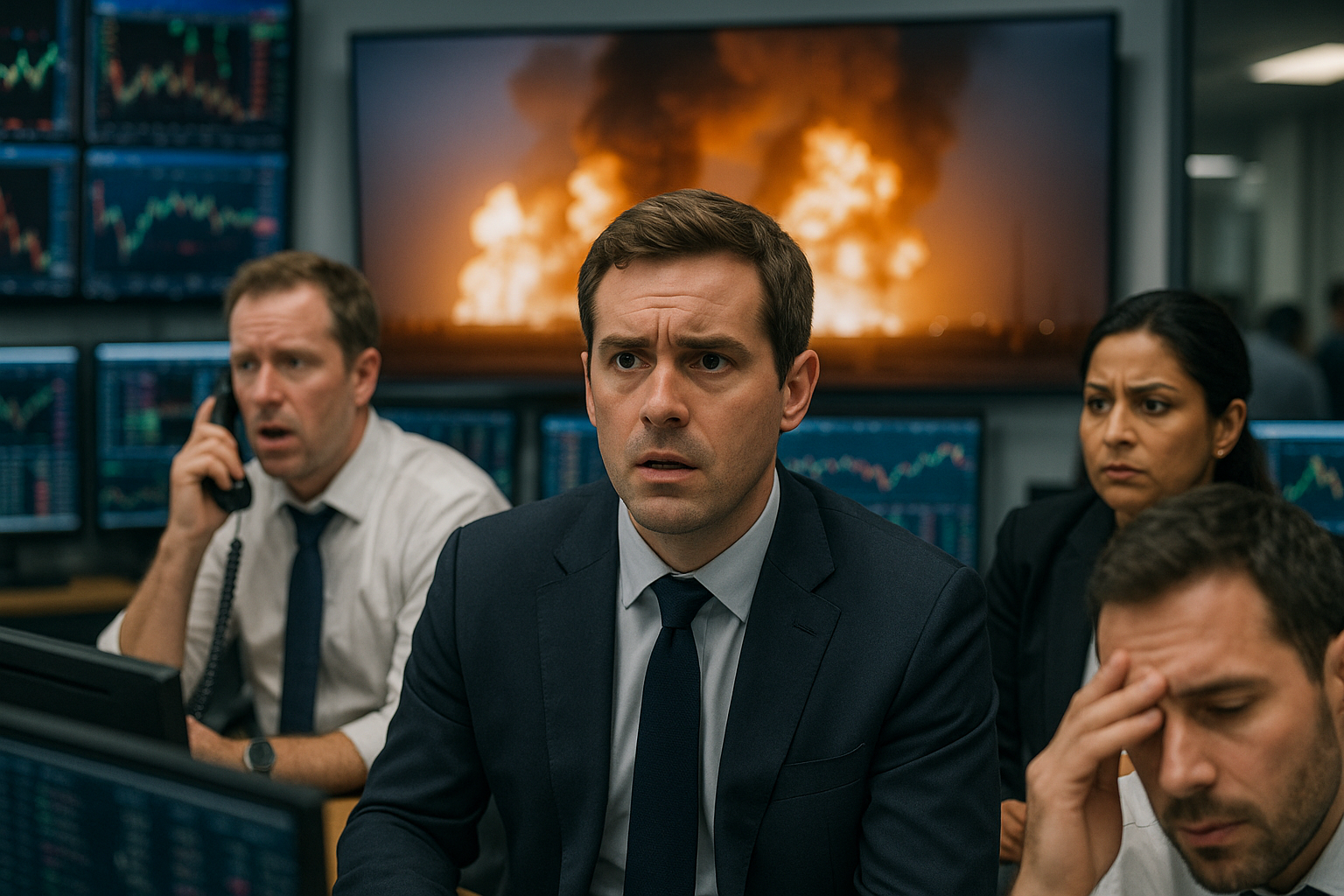
Iran-aligned Houthi forces hit Saudi Aramco facilities with drones and ballistic missiles Tuesday. Saudi Arabia's energy ministry suspended operations at several sites, firefighters were still working the blazes, and more than 70 people were wounded. Brent touched $99 a barrel. West Texas Intermediate for October settled up 2.4% at $93.68.
Gold fell.
The metal dropped $44.72, or 1.02%, to $4,360.26 an ounce, its third straight losing session. Silver eased 0.57% to $65.76. On the classic script — Middle East supply shock, burning oil infrastructure, an explicit Iranian threat against the United States — both should have caught a bid. Neither did.
Real Yields Are Setting the Price
The explanation is sitting in the futures market. Friday's August payrolls came in at 162,000 against forecasts near 55,000, with unemployment holding at 4.1%. That single print pushed traders toward pricing a Federal Reserve rate hike at the September 15-16 FOMC meeting — roughly 60% odds, with CME FedWatch running as high as 66% in late August after Chair Kevin Warsh's Jackson Hole remarks. The federal funds target has sat at 3.50%-3.75% since December 2025.
Gold pays no coupon. When the 10-year Treasury yield is scraping 4.79%, near its highest level since November 2023, the opportunity cost of holding bullion rises every session. That arithmetic is currently overwhelming the geopolitical bid.
"The military activity is maintaining a significant risk premium in energy markets amidst heightened possibility of deeper disruptions to global supply," said Kyle Rodda, senior analyst at Capital.com. The premium is showing up in crude. It is not showing up in metal.
Equities read it the same way. The Dow fell 626.72 points, or 1.17%, to 52,787.53. The S&P 500 slipped 0.58% to 7,673.60 and the Nasdaq lost 0.32% to 26,421.41. The VIX rose to 15.53 — elevated, not alarmed.
The Ratio Tells a Second Story
Gold and silver are not falling together. GoldSilver.com put the gold/silver ratio at 66.3 on Tuesday, down from a 70.4 peak on August 3 and up from 61.7 three months ago — an 8.7-point round trip in twelve weeks. Silver has been the stronger horse on a percentage basis: up 60.86% year to date against gold's 20.21%.
Both remain far below their January records. Gold peaked at $5,608.35 and silver at $121.64 before the collapse that took silver down more than 30% in roughly a day, its worst session since March 1980.
What has not changed is the physical picture. The Silver Institute's World Silver Survey 2026, published in April with Metals Focus, projects a sixth consecutive annual deficit of 46.3 million ounces, widening from 40.3 million in 2025. Some 762.1 million ounces have been pulled from above-ground stocks since 2021. COMEX registered inventories have fallen roughly 75% from about 346 million ounces in 2020 to near 88 million in February. London vault availability recovered to 28% unencumbered by the end of March from a 17% low last September — a rebound Metals Focus managing director Philip Newman called "real, but it is fragile."
August CPI lands Friday, September 11. Headline inflation ran 3.4% in July. Until that number clears, the metals are trading the Fed, not the war.
Sources: Trading Economics (gold and silver spot data, September 8, 2026), Yahoo Finance, NBC News, UPI, GoldSilver.com, Silver Institute/Metals Focus World Silver Survey 2026, CME FedWatch Tool, U.S. Bureau of Labor Statistics